
HEADLINE
Borno Youths Demand Action, Protest Escalating Insecurity and Call for Release of Terror Victims
OPENING HOOK
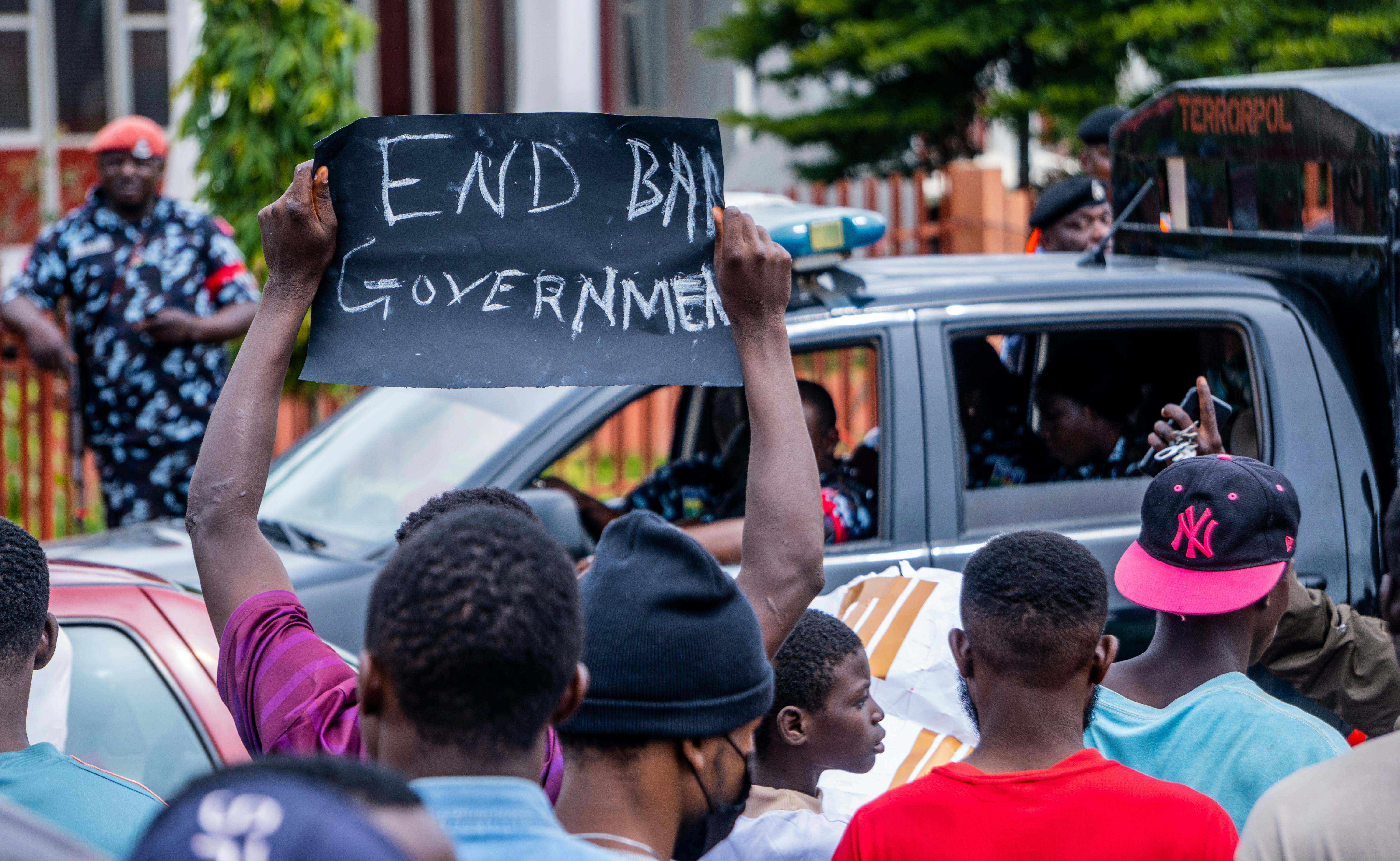
The streets of Borno State recently echoed with the determined voices of its young citizens, as a diverse coalition staged a significant protest, highlighting the severe impact of ongoing insecurity and pressing for the immediate release of those held captive by various terror groups. This demonstration underscores the deep-seated frustration and humanitarian crisis facing communities in Nigeria's North-East.
WHAT HAPPENED
In a clear display of public discontent, a coalition comprising various youth groups, student bodies, social clubs, and community forums across Borno State organized a large-scale rally. Their primary demands were two-fold: an urgent and comprehensive response from the Nigerian government to tackle the persistent insecurity plaguing the state, and the swift release of numerous individuals, often referred to as 'terror victims,' who have been abducted and held captive by insurgent groups for extended periods.
WHO ARE THE KEY PLAYERS
The central figures in this event are the **Youths of Borno State**, representing a broad spectrum of the young population, including students, members of various clubs, and community associations. They act as a collective voice, articulating the grievances and demands of the populace most affected by the crisis. Their protest is directed primarily at the **Nigerian Government** and its various security agencies, including the **Nigerian Army** and other paramilitary forces, who are constitutionally mandated to protect lives and property and maintain national security. The underlying cause of their protest involves **insurgent groups** like Boko Haram and the Islamic State's West Africa Province (ISWAP), who are responsible for the abductions and the general climate of insecurity.
UNDERSTANDING THE LOCATION
**Borno State** is located in Nigeria's North-East geopolitical zone, bordering Cameroon, Chad, and Niger. Its capital is Maiduguri. Historically, Borno has been a significant cultural and economic hub. However, for over a decade, it has been the epicenter of the Boko Haram insurgency, transforming once-thriving communities into conflict zones. The state's vast rural areas, particularly around the Lake Chad Basin, have provided fertile ground for insurgent activities, leading to widespread displacement, destruction of infrastructure, and a severe humanitarian crisis. The ongoing conflict has made Borno one of the most challenging environments for security and development in Nigeria.
BACKGROUND AND CONTEXT
The insurgency by Boko Haram, which began in earnest around 2009, has devastated Borno State and surrounding regions. The group, and later ISWAP, have carried out countless attacks, bombings, and mass abductions, including the infamous Chibok girls kidnapping. Despite significant military operations and pronouncements of victory by successive governments, pockets of insurgents continue to operate, launching attacks, ambushing travelers, and holding communities hostage. The plight of abducted persons, often referred to as 'terror victims,' has been a recurring national tragedy, with many families living in agonizing uncertainty for years. This latest protest by Borno youths is not an isolated incident but rather a continuation of public outcry against the perceived slow pace of securing peace and rescuing those in captivity.
EXPLAINING IMPORTANT REFERENCES
When the youths refer to **'insecurity,'** they are speaking of the pervasive threat of attacks, kidnappings, and general lawlessness perpetuated by non-state armed groups, primarily Boko Haram and ISWAP, which disrupt daily life, economic activities, and education. This insecurity has led to significant loss of lives and livelihoods. The term **'terror victims'** in this context refers to individuals, both adults and children, who have been abducted or forcibly taken by these insurgent groups. Their release is a highly emotional and critical demand, as many have spent years in captivity, facing unknown conditions, while their families endure prolonged anguish.
IMPACT ANALYSIS
The protest by Borno youths carries significant weight. Firstly, it amplifies the voices of those directly affected by the insurgency, bringing renewed national and international attention to the humanitarian crisis in the North-East. Such public demonstrations exert considerable pressure on the **President Bola Ahmed Tinubu**-led federal government and the Borno State government to intensify security operations and explore all possible avenues for the release of captives. Secondly, it can galvanize public support for victims' families and potentially lead to increased advocacy for improved security strategies and post-conflict recovery efforts. However, there is also the risk of misinterpretation or escalation if the government's response is perceived as inadequate, potentially leading to further civil unrest or a deepening of public mistrust in state institutions.
WHAT HAPPENS NEXT
Following the protest, several scenarios could unfold. The Nigerian government, through its security apparatus, might issue statements acknowledging the youths' demands and reaffirming its commitment to tackling insecurity and rescuing abducted persons. There could be an intensification of military operations in known insurgent strongholds, or renewed efforts at non-kinetic approaches, such as dialogue or prisoner exchanges, though the government rarely confirms such tactics. The protesting youths and their coalition partners are likely to monitor the government's response closely and may plan further actions if their demands are not met with tangible results. The international community, often providing humanitarian aid to the region, will also be watching for the government's actions to ensure the safety and well-being of its citizens.
HERO PERSPECTIVE
Leverage On Heroes Media firmly believes that the voice of the people, especially those directly impacted by conflict, is paramount. The protest by Borno youths is a courageous act of civic engagement, demanding accountability and action from their leaders. Our editorial stance emphasizes that true governance is measured by the government's capacity to protect its citizens and respond effectively to their plight. We advocate for a multi-faceted approach to the North-East crisis, combining robust security operations with sustained humanitarian efforts, community engagement, and transparent communication regarding the fate of all terror victims. The safety and freedom of every Nigerian must be the ultimate priority.
CLOSING
The protest in Borno State serves as a poignant reminder that while national attention may sometimes wane, the daily reality of insecurity and the trauma of abduction remain deeply ingrained for millions. The call from Borno's youths is not just for security, but for justice, hope, and the affirmation of their right to a peaceful existence.