
HEADLINE
Lagos State Government Plans Compulsory Soil Tests for Major Construction Projects
OPENING HOOK
In a decisive push to halt the recurring tragedy of building collapses, the Lagos State Government has announced plans to make comprehensive soil testing a mandatory prerequisite for all major construction works across the commercial capital.
WHAT HAPPENED
The Lagos State Government has initiated a strict policy direction making geological and geotechnical investigations compulsory before any major construction project can commence. Developers and property owners will now be legally required to analyze the load-bearing capacity and stability of the ground before obtaining final building approvals, aiming to eliminate structural failures caused by poor foundation engineering.
WHO ARE THE KEY PLAYERS
The primary driver of this policy is the Lagos State Government, acting through its various physical planning, urban development, and building control agencies. These regulatory bodies oversee structural approvals, monitor active construction sites, and enforce safety codes across the sprawling metropolis to protect lives and investments.
UNDERSTANDING THE LOCATION
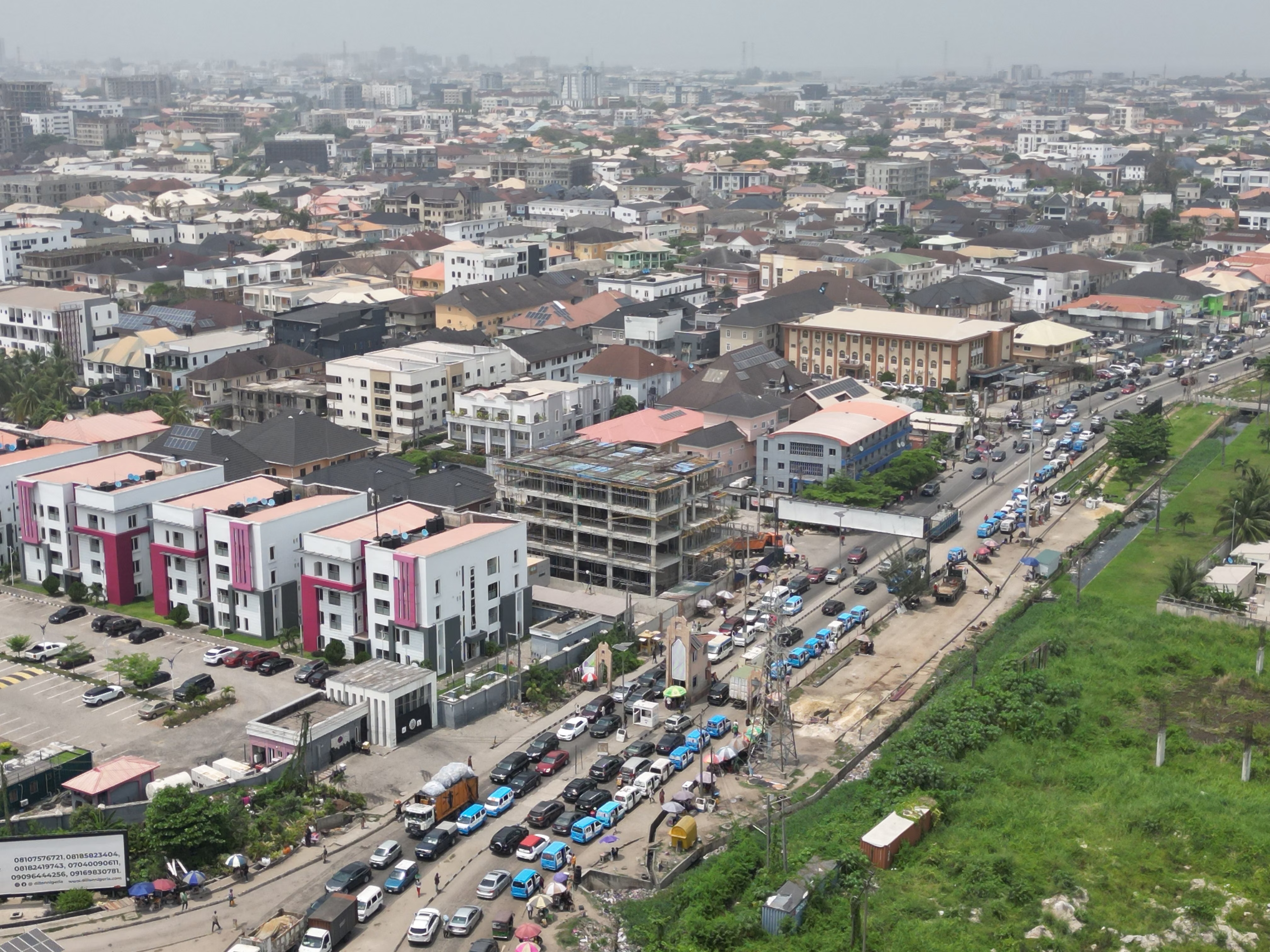
Lagos, located in the South-West geopolitical zone of Nigeria, is the nation's commercial heartbeat and most densely populated state. Much of the coastal landscape features high water tables and varied terrain, ranging from sandy shorelines to swampy marshlands. These unique geological conditions require specialized civil engineering practices to support heavy high-rise structures safely.
BACKGROUND AND CONTEXT
Building collapses have unfortunately remained a recurring challenge in major urban centers across Nigeria, with Lagos recording a disproportionate number of incidents due to rapid urbanization and real estate pressures. Historically, enforcement gaps, illegal additions to approved plans, and skipped foundational tests have contributed to catastrophic failures. Requiring scientific soil analysis marks an institutional shift toward proactive prevention rather than reactive enforcement.
EXPLAINING IMPORTANT REFERENCES
Geotechnical investigations refer to scientific assessments of subsurface soil and rock properties at a construction site. Civil engineers use these tests to determine whether the ground can safely bear the weight of a proposed structure or if specialized foundations, such as deep piles, are required to prevent sinking or tilting.
IMPACT ANALYSIS
For real estate developers, this mandate will introduce additional upfront project costs and extend the pre-construction timeline, as specialized soil sampling and laboratory analysis take time and financial commitment. However, for everyday citizens and future homeowners, the policy offers vital long-term safety assurance, potentially saving lives and protecting substantial financial investments from crumbling due to weak foundations.
WHAT HAPPENS NEXT
Following this policy announcement, relevant state ministries and planning agencies are expected to issue detailed implementation guidelines, specifying accredited laboratories and the exact technical documentation required from developers. Enhanced site inspections and penalties for non-compliance are anticipated as the government rolls out enforcement mechanisms.
HERO PERSPECTIVE
Making geological and geotechnical investigations compulsory for major construction projects in Lagos addresses a critical vulnerability in urban development. By anchoring building approvals to empirical soil data rather than visual assumptions, the state targets the foundational root cause of numerous structural failures.
CLOSING
As Lagos continues its rapid vertical and horizontal expansion, balancing urban growth with strict safety regulations remains paramount. The success of this mandatory soil testing policy will ultimately depend on transparent enforcement, professional integrity, and zero tolerance for regulatory shortcuts.