
HEADLINE
State Police in Nigeria: Unpacking the Debate for a Decentralized Security Future
OPENING HOOK
Nigeria, a nation grappling with persistent security challenges ranging from banditry and kidnapping to communal clashes and insurgency, finds itself at a pivotal crossroads. The long-standing debate over establishing state police, a departure from the current centralized security model, has intensified, demanding a clear-eyed examination of its potential and pitfalls.
WHAT HAPPENED
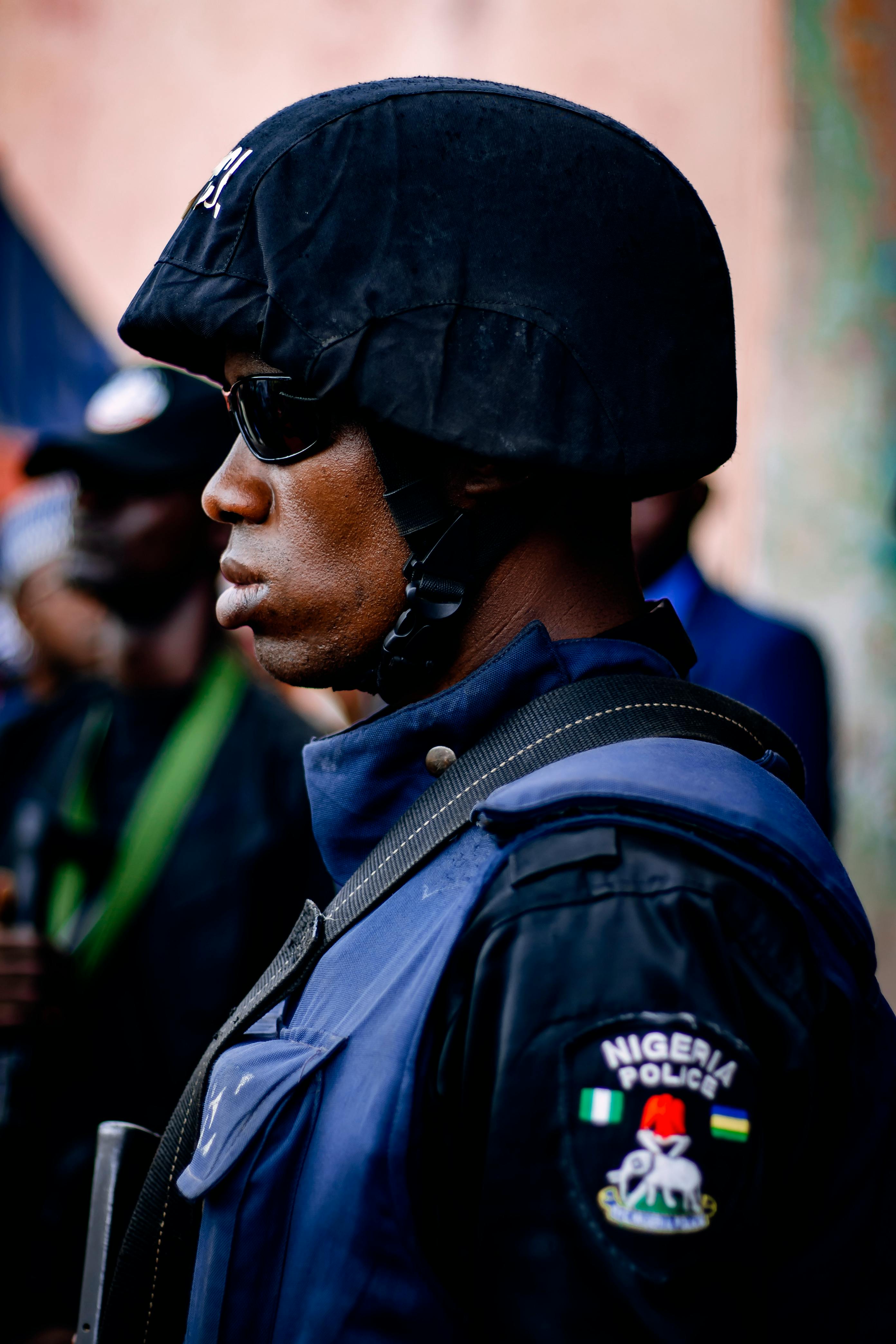
The discussion around decentralizing Nigeria's police force to allow individual states to establish and control their own police structures has gained significant momentum. This renewed push is largely driven by the perceived inability of the federally controlled Nigeria Police Force to effectively curb widespread insecurity across the nation's 36 states and 774 local government areas. Stakeholders, including state governors, civil society organizations, and concerned citizens, are advocating for this structural change as a crucial step towards improving local security responses and accountability.
WHO ARE THE KEY PLAYERS
At the heart of this discourse are several key entities. The **Federal Government of Nigeria**, through its executive and legislative arms, holds the constitutional power to initiate and implement such a fundamental change. **State Governors**, who currently serve as Chief Security Officers in their respective states without direct control over police operations, are among the most vocal proponents. The **Nigeria Police Force (NPF)**, currently the sole policing body, stands to undergo significant restructuring if state police are adopted. Furthermore, **civil society organizations** and the **general populace** play a vital role in shaping public opinion and advocating for reforms.
UNDERSTANDING THE LOCATION
The debate on state police directly impacts the entire **Federal Republic of Nigeria**, a diverse nation of six geopolitical zones: North-West, North-East, North-Central, South-West, South-East, and South-South. Each zone and its constituent states face unique security challenges, from cattle rustling in the North-West to cultism in the South-South. The current centralized police structure often struggles to adapt to these varied local contexts, leading to calls for localized policing solutions tailored to specific state needs and demographics.
BACKGROUND AND CONTEXT
Nigeria's current policing system dates back to the colonial era, solidified post-independence into a single, centralized force under federal command. This structure was largely a response to fears of regional fragmentation and potential abuse of state-controlled forces by political actors, particularly following the First Republic. However, decades of underfunding, insufficient manpower, inadequate training, and a disconnect from local communities have severely hampered the NPF's effectiveness. The rise of non-state armed groups and escalating violent crime across the nation has brought the limitations of the current system into sharp focus, making the argument for state police more compelling than ever before.
EXPLAINING IMPORTANT REFERENCES
When we talk about a **'heavily centralized police structure'**, we mean that the entire Nigeria Police Force, from recruitment to deployment and funding, is controlled by the Federal Government in Abuja. This means a police officer serving in Enugu State, for example, answers to the Inspector General of Police in Abuja, not the Enugu State Governor. The concept of **'state police'** proposes that each of Nigeria's 36 states would establish, fund, and control its own police force, responsible for law enforcement within its borders. This is a fundamental shift in the country's **'federalism'**, which is a system of government where power is divided between a central authority (the Federal Government) and individual constituent units (the states). The debate fundamentally questions whether security should remain exclusively on the federal list or become a concurrent responsibility.
IMPACT ANALYSIS
The introduction of state police carries significant implications. **Proponents** argue it would enhance community policing, allowing for faster response times, better local intelligence gathering, and improved accountability to state governments and local communities. They believe it would lead to a more tailored approach to insecurity, potentially reducing incidents of kidnapping, banditry, and communal violence. **However, critics** raise concerns about potential abuse by state governors, who might use state police for political intimidation or to suppress dissent. There are also worries about funding disparities between rich and poor states, which could lead to an uneven distribution of well-equipped and trained officers. The risk of inter-state conflict or ethnic bias within state-controlled forces also remains a major point of contention.
WHAT HAPPENS NEXT
The path to establishing state police is complex and would necessitate significant constitutional amendments. This process involves the National Assembly, state Houses of Assembly, and ultimately, a presidential assent. We can expect ongoing public debates, legislative hearings, and possibly the formation of committees to study various models of state policing, including hybrid systems or a phased implementation approach. Key considerations will include funding mechanisms, training standardization, oversight bodies to prevent abuse, and clear delineation of responsibilities between federal and state forces. A national consensus, rather than a hurried decision, will be crucial for any successful transition.
HERO PERSPECTIVE
Leverage On Heroes Media believes that the discussion around state police is not merely about administrative restructuring; it is fundamentally about safeguarding lives and property, and strengthening the fabric of our nation. Our editorial stance emphasizes the critical need for an evidence-based, comprehensive approach that prioritizes national unity and citizen security above all else. While acknowledging the clear failures of the current centralized system, we advocate for a robust framework that includes strong oversight mechanisms, clear funding guidelines, and federal minimum standards for training and operations, should state policing be adopted. This ensures that the pursuit of local solutions does not inadvertently create new challenges or undermine the cohesion of the Nigerian state.
CLOSING
The decision on state police will undoubtedly be one of the most defining policy choices for Nigeria in recent history. As the nation deliberates, it is imperative that facts guide the discourse, ensuring that any reform truly serves the collective good and paves the way for a more secure and prosperous future for all Nigerians.