
HEADLINE
Ancient Giant Unearthed: New Dinosaur Species with Neck Like Two Commercial Buses Discovered in Thailand
OPENING HOOK
From the depths of geological time, a monumental discovery in Southeast Asia is rewriting parts of the prehistoric narrative, captivating scientists and enthusiasts alike. A new species of long-necked dinosaur, whose sheer size evokes awe, has been brought to light, offering a fresh window into Earth's ancient past.
WHAT HAPPENED
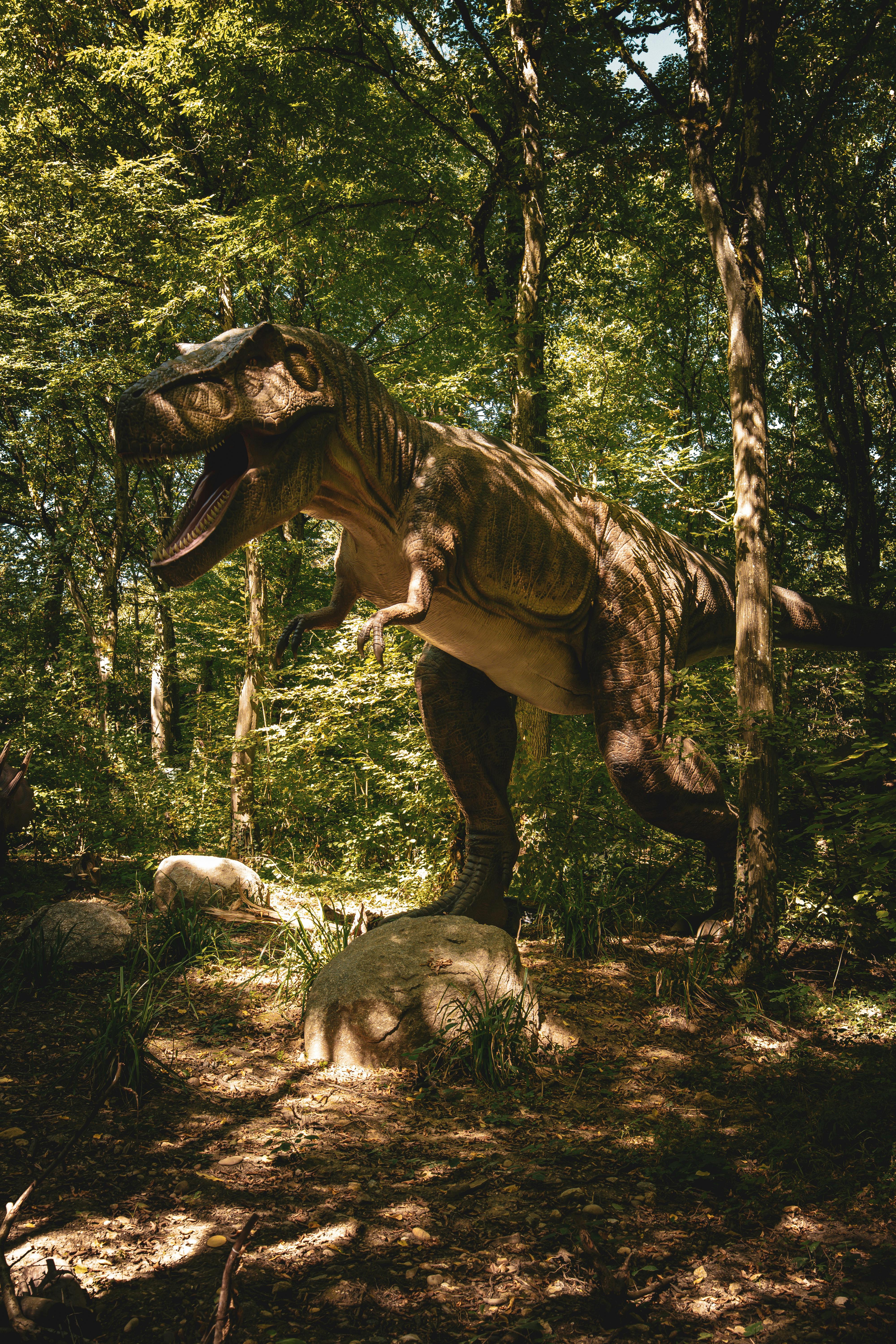
Paleontologists in Thailand have announced the discovery of a previously unknown species of plant-eating dinosaur, christened *Uragasaurus kalasinensis*. This ancient giant is believed to have roamed the Earth approximately 150 million years ago during the Jurassic period. Its most striking feature is an exceptionally long neck, estimated to be roughly the length of two standard Nigerian commercial buses parked bumper-to-bumper, or about 20 meters, making it a significant find in the field of paleontology.
WHO ARE THE KEY PLAYERS
The primary actors in this scientific unveiling are the dedicated paleontological teams and researchers from various geological and academic institutions in Thailand, likely supported by international collaborators. While specific names were not highlighted in the initial reports, these experts are responsible for the meticulous excavation, study, and classification of the fossilized remains. Their collective efforts bring such ancient wonders to modern understanding.
UNDERSTANDING THE LOCATION
The discovery was made in Thailand, a country in Southeast Asia known for its diverse landscapes, rich cultural heritage, and increasingly, its paleontological significance. More specifically, the dinosaur's name, *kalasinensis*, strongly suggests its origin from Kalasin Province, located in the northeastern region of Thailand. This area has been a notable site for fossil discoveries, indicating a historical environment conducive to preserving ancient life forms over millions of years.
BACKGROUND AND CONTEXT
The Jurassic period, spanning roughly 201 to 145 million years ago, is often dubbed the 'Age of Dinosaurs,' characterized by the dominance of large sauropods and theropods. Discoveries like *Uragasaurus kalasinensis* provide crucial pieces to the global puzzle of dinosaur evolution and distribution. While dinosaur fossils have been found across continents, Southeast Asia, including Thailand, has proven to be a fertile ground for uncovering unique species, contributing significantly to our understanding of ancient ecosystems and continental drift patterns. This find adds to the growing evidence of a vibrant and diverse dinosaur population in ancient Gondwana, the supercontinent that included what is now Asia, Africa, and other landmasses.
EXPLAINING IMPORTANT REFERENCES
*Uragasaurus kalasinensis*: This scientific name provides clues about the dinosaur. While 'Uragasaurus' likely refers to a specific characteristic or a local reference, 'kalasinensis' is a geographical epithet, indicating that the fossil was found in or near Kalasin Province, Thailand. This is a common practice in naming new species, linking them directly to their discovery site.
*Plant-eating dinosaur*: In simpler terms, this means *Uragasaurus kalasinensis* was a herbivore, feeding exclusively on plants. Like many long-necked dinosaurs (sauropods), its elongated neck would have allowed it to reach vegetation high in trees, similar to how a giraffe browses today. Its diet would have consisted of ferns, conifers, and cycads, which were abundant during the Jurassic period.
*Neck as long as a cricket pitch*: A cricket pitch is a specific strip of ground used in the sport of cricket, measuring 22 yards or approximately 20.12 meters. To put this into a relatable Nigerian context, this length is roughly equivalent to two 'long chassis' commercial buses, often used for inter-city travel, parked end-to-end. This comparison vividly illustrates the immense scale of the dinosaur's neck.
IMPACT ANALYSIS
This discovery has profound implications for paleontology. Scientifically, *Uragasaurus kalasinensis* offers new data points for understanding the evolutionary pathways of sauropods, their anatomical adaptations, and their distribution across ancient landmasses. It could help refine theories about ancient climate, vegetation, and the ecosystems that supported such colossal creatures. For Thailand, the find bolsters its reputation as a significant paleontological hotspot, potentially attracting more research funding and international collaboration. Beyond academia, such discoveries often spark public interest in science, history, and natural heritage, potentially boosting educational tourism to the region.
WHAT HAPPENS NEXT
The immediate next steps involve detailed scientific analysis of the fossil remains. This includes precise dating, comparative anatomy with known species, and potential reconstruction efforts to understand the dinosaur's full morphology. Researchers will likely publish their findings in peer-reviewed journals, opening avenues for further discussion and verification within the global scientific community. The discovery site will also likely undergo more extensive exploration, with the hope of uncovering additional fossils or even more complete skeletons, which could further illuminate the life and times of *Uragasaurus kalasinensis* and its contemporaries. Efforts will also focus on the preservation and exhibition of the fossil, making it accessible for both scientific study and public viewing.
HERO PERSPECTIVE
At Leverage On Heroes Media, we view the discovery of *Uragasaurus kalasinensis* as a powerful testament to humanity's enduring quest for knowledge and understanding of our world's deep history. It underscores the vital role of scientific exploration in expanding our horizons, reminding us that even after millions of years, the Earth continues to reveal its secrets. This find is not just about an ancient creature; it's about inspiring the next generation of Nigerian scientists, researchers, and innovators to look beyond the immediate, to question, to explore, and to contribute to the global pool of knowledge that enriches us all. It champions the heroism of curiosity and the unwavering spirit of discovery.
CLOSING
The unearthing of *Uragasaurus kalasinensis* in Thailand is a vivid reminder of the incredible biodiversity that once thrived on Earth and the continuous revelations that await us. It reinforces the importance of sustained paleontological research, not just for scientific advancement but for fostering a deeper appreciation of our planet's magnificent, ancient narrative.