
HEADLINE
Brazil's Amazon Deforestation Plummets to Decade Low, Offering Glimmer of Hope for Global Climate
OPENING HOOK
The Amazon Rainforest, often called the 'lungs of the Earth,' has long been a focal point in the global fight against climate change. For years, alarming rates of deforestation threatened this vital ecosystem. Now, a new report from Brazil offers a significant cause for cautious optimism, indicating a notable turnaround in conservation efforts.
WHAT HAPPENED
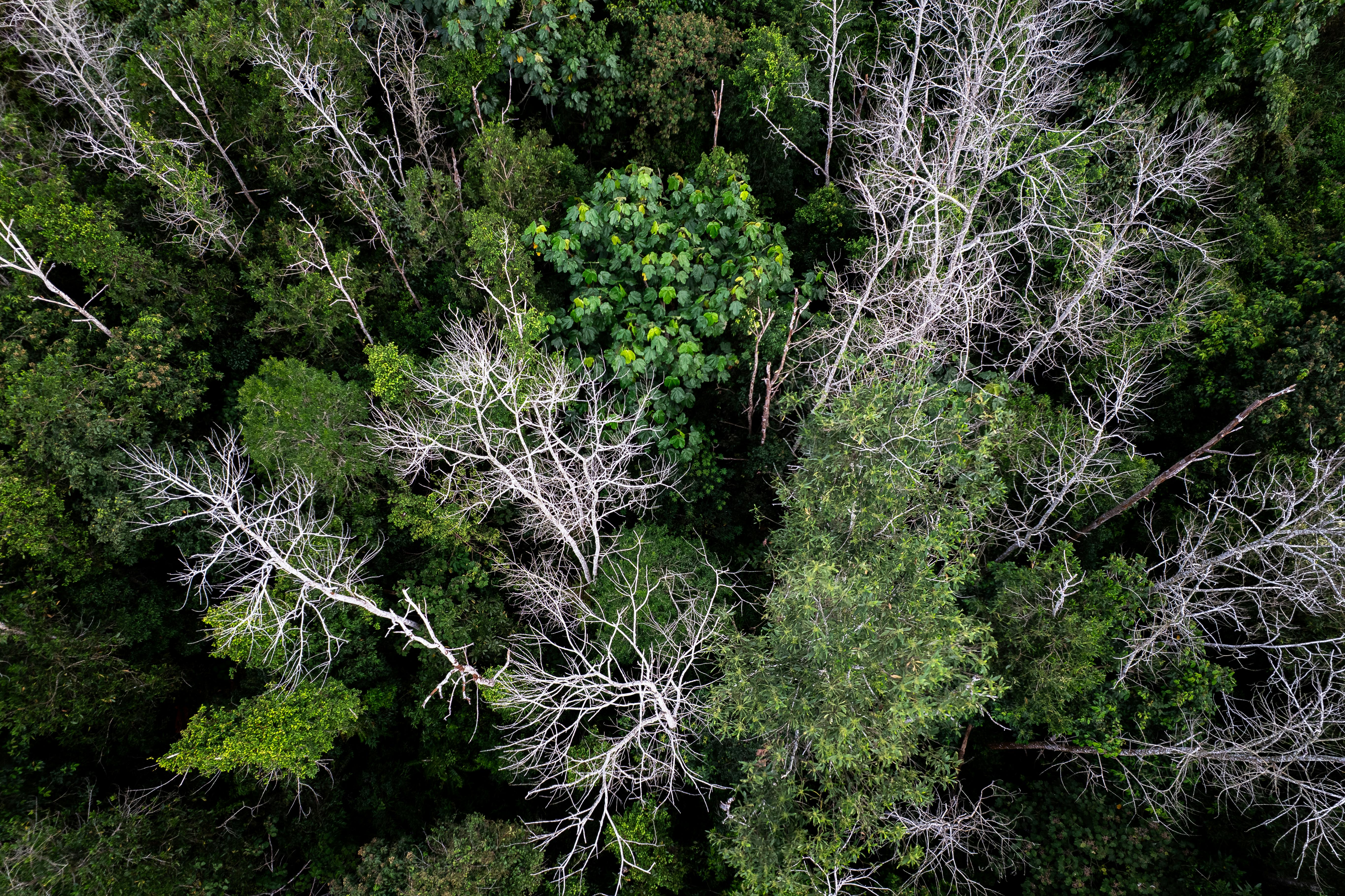
Official figures released recently indicate that deforestation in the Brazilian Amazon has fallen to its lowest level in a decade during the first half of the year. This substantial reduction represents a critical development in the ongoing struggle to protect one of the world's most biodiverse and ecologically important regions. The data suggests that concerted efforts by Brazilian authorities are beginning to yield positive results.
WHO ARE THE KEY PLAYERS
At the forefront of this development is the **Brazilian government**, particularly its environmental agencies, which are responsible for policy formulation, enforcement, and monitoring within the nation's borders. The **Amazon Rainforest** itself is a central player, a vast ecosystem spanning several South American countries, with the largest portion lying within Brazil. **Environmental organizations** globally and within Brazil, such as Greenpeace and the World Wildlife Fund, have consistently advocated for stronger protections. Lastly, **Indigenous communities** living within the Amazon are crucial stakeholders, often serving as frontline defenders of the forest and holding traditional knowledge vital for its preservation.
UNDERSTANDING THE LOCATION
The **Amazon Rainforest** is the largest tropical rainforest on Earth, covering approximately 6.7 million square kilometers. It plays an indispensable role in regulating global climate patterns, absorbing vast amounts of carbon dioxide, and housing an unparalleled diversity of plant and animal species. Brazil contains about 60% of this critical biome, making its environmental policies profoundly impactful on a global scale.
BACKGROUND AND CONTEXT
Historically, the Brazilian Amazon has faced immense pressure from deforestation, driven primarily by agricultural expansion, illegal logging, mining, and infrastructure projects. Periods of relaxed environmental enforcement often coincided with spikes in forest destruction. Over the past few decades, various Brazilian administrations have grappled with balancing economic development with environmental protection. The current positive trend comes after a period where deforestation rates had soared, drawing international criticism and concerns about the Amazon's long-term viability. This recent downturn suggests a renewed commitment to conservation, possibly reflecting a shift in governmental priorities and more robust enforcement mechanisms.
EXPLAINING IMPORTANT REFERENCES
**Deforestation** refers to the clearing of forest land for other uses, such as cattle ranching, soybean farming, or timber extraction. It is a major contributor to climate change, as trees store carbon, and their removal releases this carbon into the atmosphere. The **Brazilian Amazon** specifically denotes the portion of the Amazon rainforest that falls within Brazil's national boundaries. When we speak of **official figures**, we are referring to data meticulously collected and published by government agencies, typically using advanced satellite monitoring systems to track changes in forest cover. In Brazil, this is often spearheaded by institutions like the National Institute for Space Research (INPE), which provides accurate and verifiable information on deforestation rates.
IMPACT ANALYSIS
This significant drop in deforestation has multifaceted impacts. Environmentally, it means reduced carbon emissions, helping in the global fight against climate change, and better preservation of biodiversity. For Brazil, it could improve its international standing and potentially unlock more funding for conservation initiatives. Socially, it offers hope for the protection of indigenous territories and the livelihoods of forest-dependent communities. Economically, while some argue that conservation hinders development, sustainable practices can lead to long-term economic benefits through ecotourism, sustainable agriculture, and responsible resource management. The challenge remains to sustain this positive trend against powerful economic pressures.
WHAT HAPPENS NEXT
The immediate focus will be on sustaining this momentum. This requires continued vigilance from Brazilian environmental agencies, robust enforcement against illegal activities, and the implementation of policies that promote sustainable development over destructive practices. International cooperation, including financial support for conservation and sustainable projects, will also play a crucial role. Monitoring efforts will be key to ensuring that this positive trend is not merely a temporary anomaly but a lasting commitment to protecting the Amazon. Future developments will likely involve strengthening partnerships with indigenous communities, who are often the most effective guardians of the forest, and exploring innovative economic models that value standing forests over cleared land.
HERO PERSPECTIVE
At Leverage On Heroes Media, we see this reduction in Amazon deforestation as a testament to the fact that dedicated effort can indeed turn the tide on seemingly insurmountable environmental challenges. It highlights the 'heroic' work of countless individuals, from environmental activists to government officials, who champion the cause of our planet. While this is a significant victory, it is not the end of the battle. Our editorial stance is that true heroism lies in sustained commitment, continuous innovation, and unwavering advocacy for the protection of our natural heritage. This positive development serves as a powerful reminder that with collective will, a healthier planet is within reach, but the fight for environmental sustainability must remain relentless.
CLOSING
The recent figures from the Brazilian Amazon offer a beacon of hope in a world grappling with environmental crises. They underscore the critical importance of effective governance and global collaboration in safeguarding our planet's most precious natural assets. As the world watches, the sustained protection of the Amazon will remain a litmus test for humanity's commitment to a sustainable future.