
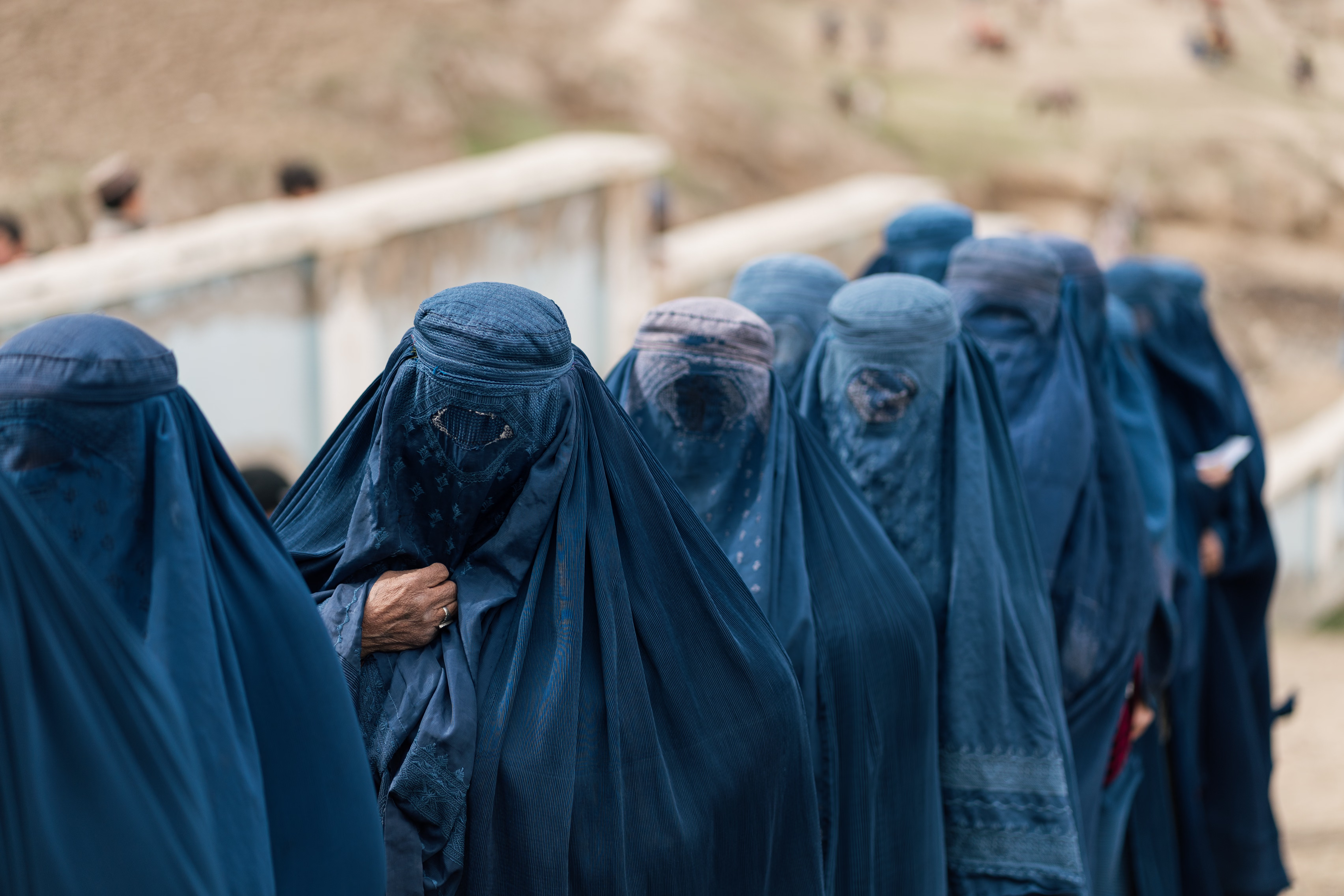
HEADLINE
‘Her face was beaten in’: how Taliban rule ushered in a new era of women being killed
OPENING HOOK
In a harrowing voice message recorded weeks before her death, 33-year-old Liza Shams pleaded for prayers, stating that her husband, Hasibullah Sarwari, had subjected her to brutal violence while she was pregnant.
WHAT HAPPENED
An extensive investigative report documenting 231 femicide cases across Afghanistan has revealed a systematic rise in the killings of women under the current regime. The investigation highlights how perpetrators, emboldened by systemic state policies, evade criminal accountability while authorities actively cover up the murders. Victims like Shams faced severe physical abuse, isolation, and fatal assaults without access to legal recourse or protection.
WHO ARE THE KEY PLAYERS
Liza Shams, victim, a 33-year-old Afghan woman whose voice recordings documented severe domestic abuse. Hasibullah Sarwari, perpetrator, husband of Liza Shams accused of fatal domestic violence. The Taliban, ruling authority, the de facto government of Afghanistan whose restrictive policies and judicial changes have dismantled legal protections for women.
UNDERSTANDING THE LOCATION
Afghanistan is a landlocked country situated at the crossroads of Central and South Asia. Following the withdrawal of international military forces in August 2021, the Taliban reclaimed total governance over the nation, dismantling the previous secular legal frameworks and severely restricting public and private freedoms for women.
BACKGROUND AND CONTEXT
Since regaining power, the Taliban has systematically dismantled the Ministry of Women's Affairs, banned female judges, lawyers, and human rights defenders, and closed domestic violence shelters. These structural changes effectively removed all legal safeguards for women, creating an environment where domestic abuse and honor-based violence are met with official indifference or complicity.
EXPLAINING IMPORTANT REFERENCES
Femicide refers to the intentional murder of women because they are women, typically perpetrated by intimate partners or family members. Under international human rights law, states are obligated to investigate and prosecute such acts; however, the current Afghan administration rejects international legal standards regarding gender equality.
IMPACT ANALYSIS
Families of victims face severe threats if they attempt to seek justice or speak out publicly about gender-based violence. The collapse of the formal judicial system leaves millions of Afghan women with no institutional recourse against domestic terror, leading to widespread psychological trauma and a pervasive climate of fear.
WHAT HAPPENS NEXT
Human rights organisations and United Nations bodies continue to document these abuses, urging international pressure on the de facto authorities. However, absent diplomatic leverage or armed internal resistance, domestic monitoring remains severely restricted, threatening further concealment of similar crimes.
HERO PERSPECTIVE
This investigation into 231 documented femicide cases under Taliban rule in Afghanistan illustrates the lethal consequences of dismantling institutional legal protections for women. The specific voice recordings left by Liza Shams detailing abuse by her husband, Hasibullah Sarwari, provide concrete evidence of state-backed impunity. Documenting these specific cases remains critical to holding perpetrators accountable despite official cover-ups.
CLOSING
The documented rise in unpunished killings underscores a profound humanitarian crisis for women in Afghanistan, demanding sustained global attention and rigorous documentation.