
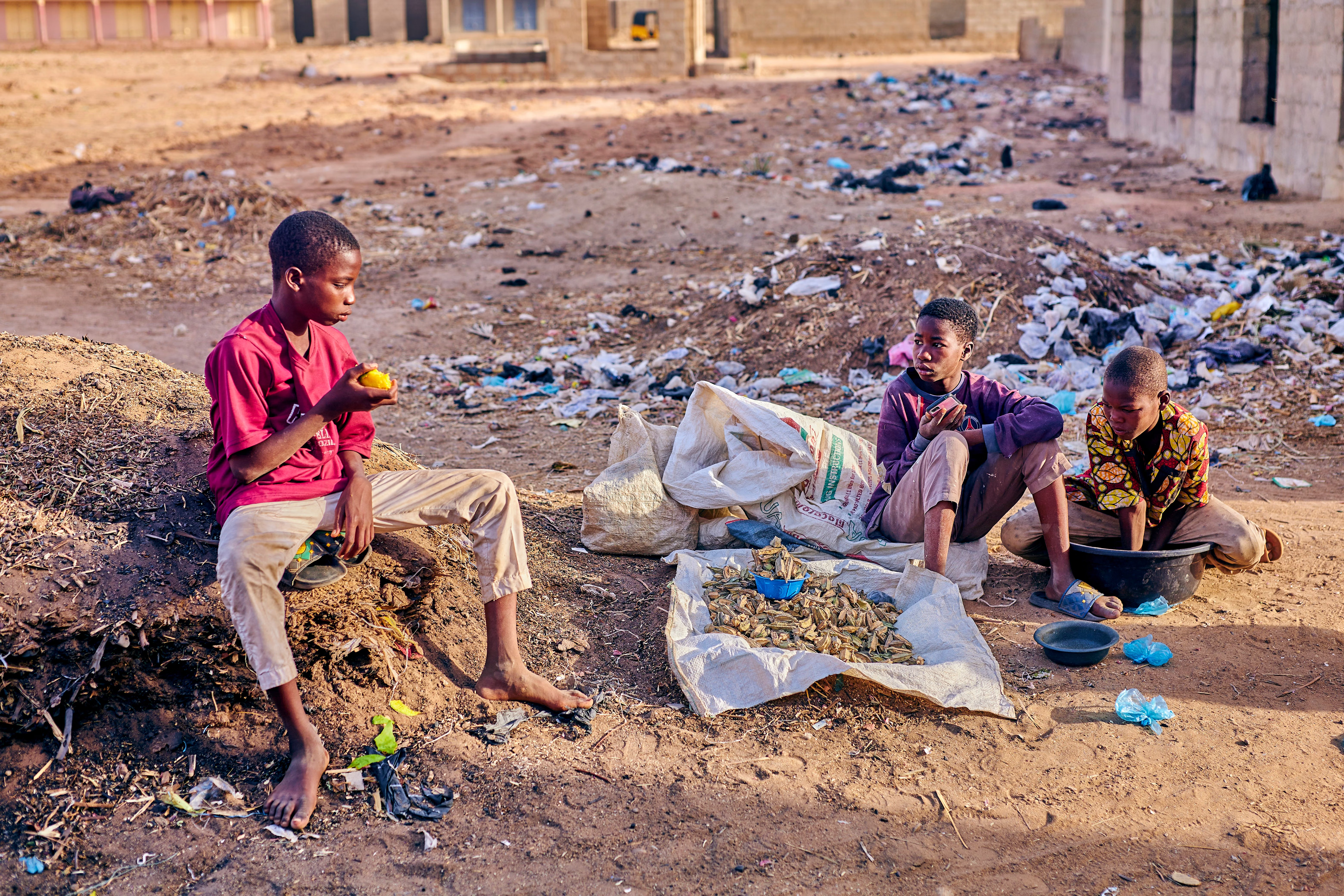
HEADLINE
LAWMA trains children on waste management, recycling
OPENING HOOK
Building a cleaner future requires instilling sustainable habits early, a principle put into practice as the Lagos Waste Management Authority Academy launches its 2026 Summer School for young participants.
WHAT HAPPENED
The Lagos Waste Management Authority Academy has officially commenced its 2026 Summer School program, designed specifically to train children aged 7 to 15 in foundational waste management, recycling techniques, and environmental stewardship. The initiative aims to equip the younger generation with practical knowledge on how to handle domestic refuse, sort recyclable materials, and adopt eco-friendly habits that benefit their local communities across Lagos State.
WHO ARE THE KEY PLAYERS
Lagos Waste Management Authority Academy, the educational and training arm of the Lagos Waste Management Authority responsible for public sanitation education and capacity building.
UNDERSTANDING THE LOCATION
Lagos State serves as the commercial nerve center of Nigeria, characterized by high population density and rapid urbanization. Managing municipal solid waste generated by millions of residents requires continuous public orientation programs, particularly targeting schools and young people to promote behavioral change at the grassroots level.
BACKGROUND AND CONTEXT
Waste management has historically posed significant logistical challenges for metropolitan centers in Nigeria, leading state agencies to adopt proactive educational strategies. Over the past decade, authorities have recognized that long-term environmental compliance and cleanliness depend heavily on catching citizens young through structured school curricula and holiday intervention programs.
EXPLAINING IMPORTANT REFERENCES
Waste management refers to the collection, transport, processing, recycling, or disposal of waste materials produced by human activity. Recycling involves converting waste materials into new objects and substances to prevent waste of potentially useful materials, reduce the consumption of fresh raw materials, and lower greenhouse gas emissions compared to plastic production.
IMPACT ANALYSIS
Educating children between the ages of 7 and 15 creates a multiplier effect within households, as participants often transfer sustainable practices to their parents and siblings. Over time, cultivating eco-conscious habits among youths reduces the volume of indiscriminate dumping on Lagos streets and waterways, easing the operational burden on state sanitation trucks and disposal sites.
WHAT HAPPENS NEXT
Following the launch of the 2026 Summer School, participants are expected to undergo practical workshops, site visits to recycling facilities, and hands-on sorting exercises. LAWMA Academy will likely track the retention and application of these lessons through community-based school clubs and environmental advocacy projects.
HERO PERSPECTIVE
LAWMA Academy launched its 2026 Summer School program specifically targeting children aged 7 to 15 to build foundational skills in waste management and recycling across Lagos State. This specialized youth-focused training provides a structured pathway for instilling long-term environmental stewardship at the grassroots level.
CLOSING
The continued expansion of youth-oriented sanitation programs highlights a shifting focus toward preventative civic education in urban waste governance.