
HEADLINE
Scientific Study Counters Trump Claims on Canadian Wildfires, Citing Climate Change
OPENING HOOK
When millions of acres of forests go up in smoke, the debate over why it happened quickly turns into a battle between political rhetoric and empirical science.
WHAT HAPPENED
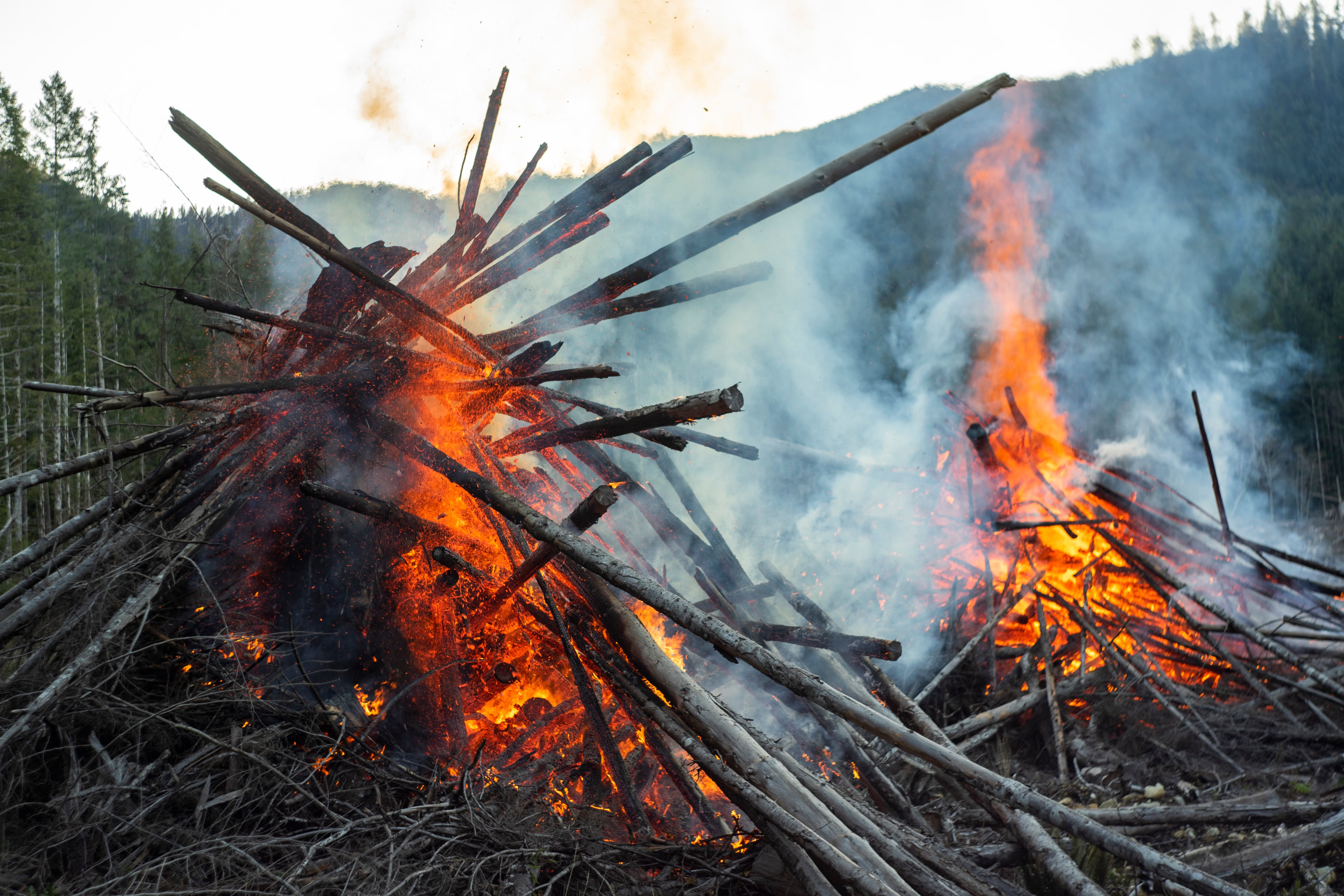
A new scientific study released by the research collective World Weather Attribution has concluded that climate change played a primary role in the massive Canadian wildfires that consumed over 7 million acres during the summer. This finding directly contradicts public statements made by President Donald J. Trump, who asserted that poor forest and land management practices were solely responsible for the environmental devastation.
WHO ARE THE KEY PLAYERS
The primary figures and groups involved in this ongoing debate include President Donald J. Trump, leader of the United States administration, who has repeatedly emphasized management flaws. On the scientific side, researchers from World Weather Attribution, an academic collaboration that includes the U.S. National Center for Atmospheric Research and Princeton University, conducted the empirical analysis.
UNDERSTANDING THE LOCATION
The events center on the vast expanses of Canadian boreal forests and woodlands. These northern ecosystems store massive amounts of carbon, and when they burn, they release significant greenhouse gases back into the atmosphere, impacting global weather patterns and air quality far beyond North America.
BACKGROUND AND CONTEXT
Wildfires have always been a natural part of forest ecosystems, helping to clear dead wood and stimulate new growth. However, rising global temperatures, prolonged droughts, and lower humidity levels have drastically extended fire seasons and intensified blazes worldwide. Scientific groups like World Weather Attribution specialize in rapidly analyzing whether extreme weather events are linked to human-induced global warming.
EXPLAINING IMPORTANT REFERENCES
World Weather Attribution is an international scientific network that studies the influence of climate change on extreme weather events like floods, heatwaves, and wildfires. The U.S. National Center for Atmospheric Research and Princeton University are prestigious research institutions that provide foundational data and modeling for these climate studies.
IMPACT ANALYSIS
The clash between political commentary and climate science shapes public policy, environmental funding, and international cooperation on ecological conservation. If policymakers attribute disasters strictly to management, resources may be misallocated away from tackling broader environmental drivers.
WHAT HAPPENS NEXT
As global temperatures continue to rise, scientific bodies will likely release further attribution studies following major natural disasters. Policymakers in North America and globally will face mounting pressure to balance land management reforms with aggressive climate mitigation strategies.
HERO PERSPECTIVE
President Donald J. Trump publicly attributed the burning of over 7 million acres of Canadian forest this summer to poor management practices. In direct contrast, the World Weather Attribution study deployed peer-reviewed climate modeling to establish that rising global temperatures were the decisive catalyst.
CLOSING
The debate over the Canadian wildfires highlights the growing friction between political narratives and peer-reviewed environmental science as the world grapples with more frequent natural disasters.