
HEADLINE
Oil Prices Rise as Yemen Houthis Claim Saudi Tanker Strike in Red Sea
OPENING HOOK
When tension flares in the narrow maritime trade lanes of the Middle East, the ripple effects are felt instantly at petrol stations from Lagos to London.
WHAT HAPPENED
Crude oil prices moved higher on Wednesday following a claim by Yemen's Iran-backed Houthi movement that they had successfully targeted a Saudi Arabian oil tanker in the Red Sea. The reported attack on the vessel has immediately heightened anxiety among global energy traders regarding the security of vital crude shipping routes, pushing benchmark futures upward as markets price in potential supply bottlenecks.
WHO ARE THE KEY PLAYERS
The Houthi movement is a political and armed organization based in Yemen that has frequently engaged in regional conflicts and maritime disruptions. Saudi Arabia, represented through its state energy infrastructure, stands as one of the world's leading crude exporters. Global energy traders and shipping companies operating tanker fleets through the Red Sea and the Bab el-Mandeb strait are directly impacted by these security incidents.
UNDERSTANDING THE LOCATION
The Red Sea is a crucial saltwater inlet of the Indian Ocean lying between Africa and Asia, connected to the Mediterranean Sea via the Suez Canal. It serves as one of the world's busiest shipping lanes, facilitating a significant portion of international trade, particularly petroleum and natural gas shipments moving from Middle Eastern producers to European and American markets.
BACKGROUND AND CONTEXT
Maritime security in the Red Sea has faced persistent threats in recent years due to regional conflicts involving the Houthi movement and international coalition forces. Disruptions in this area force shipping companies to consider longer, more expensive alternative routes around the southern tip of Africa, which invariably inflates freight costs and adds upward pressure on global fuel prices.
EXPLAINING IMPORTANT REFERENCES
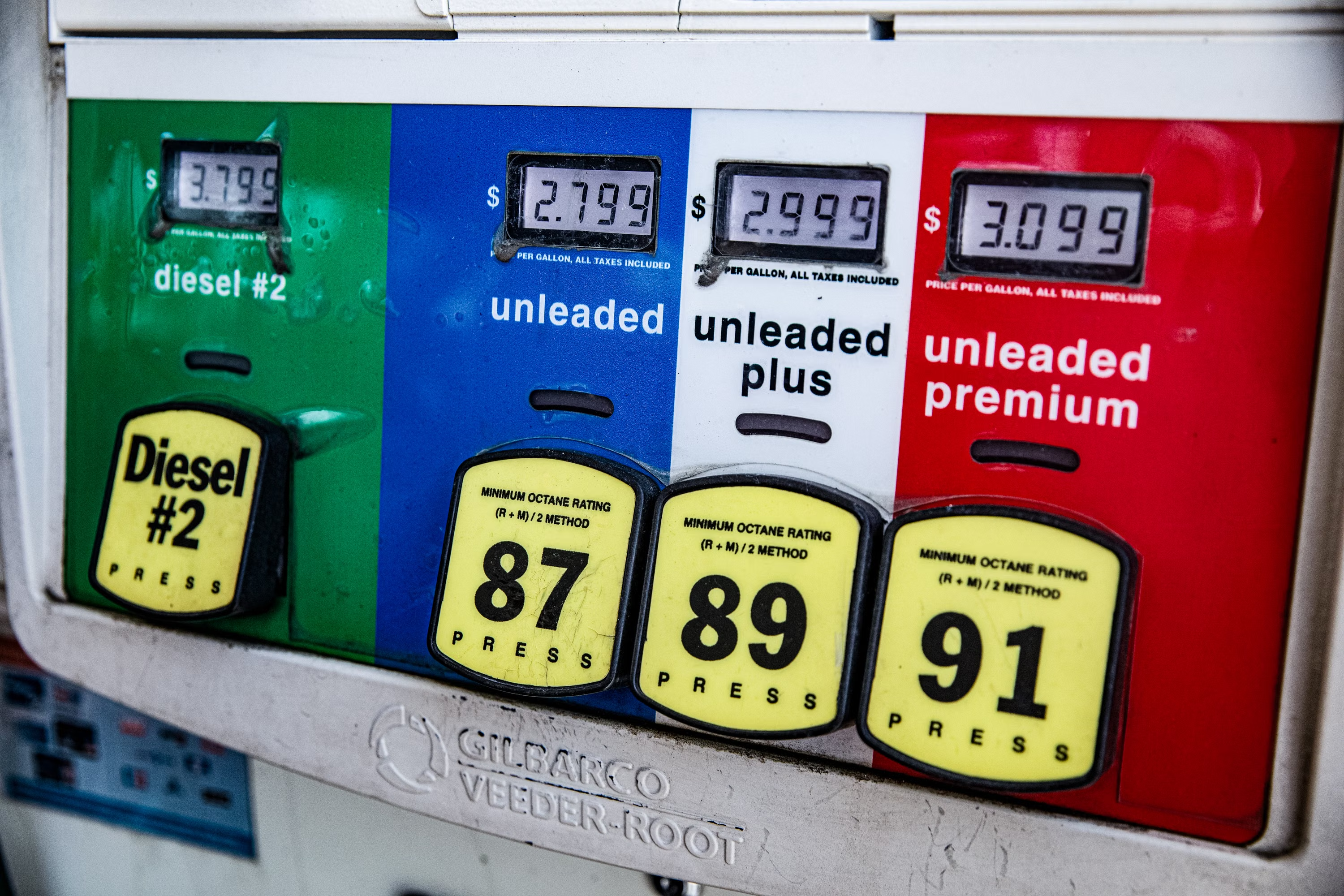
Crude oil refers to unrefined petroleum extracted from the earth, which is processed into everyday products like Premium Motor Spirit, diesel, and kerosene. Benchmark prices determine the baseline cost that importing countries and local marketers pay, directly influencing domestic pump prices and transportation fares for citizens.
IMPACT ANALYSIS
For net-importing economies and nations navigating currency fluctuations, rising global crude prices increase the cost of importing refined petroleum products. This dynamic strains government foreign exchange reserves, drives up transport and manufacturing expenses, and ultimately increases the cost of goods in local markets.
WHAT HAPPENS NEXT
Energy analysts will closely monitor military responses in the region, Saudi security assessments, and daily tanker traffic through the Red Sea corridor. If further security incidents occur, markets could experience sustained price volatility affecting international energy contracts.
HERO PERSPECTIVE
The reported Houthi claim regarding the Saudi Arabian oil tanker strike in the Red Sea directly threatens vital maritime chokepoints, immediately translating into heightened global crude prices that strain importing economies worldwide.
CLOSING
As geopolitical tensions continue to dictate the rhythm of international commodities markets, stakeholders across the energy supply chain remain on high alert for any further developments in Middle Eastern shipping corridors.