
HEADLINE
Ancient Byzantine City Unearthed in Egypt's Western Desert, Offering Glimpse into 4th-Century Life
OPENING HOOK
In a remarkable stride for historical understanding, a team of archaeologists in Egypt has unearthed a remarkably preserved city from the Byzantine era, hidden for centuries beneath the sands of the Western Desert. This discovery promises to reshape our knowledge of ancient urbanisation and daily existence in a pivotal period of history.
WHAT HAPPENED
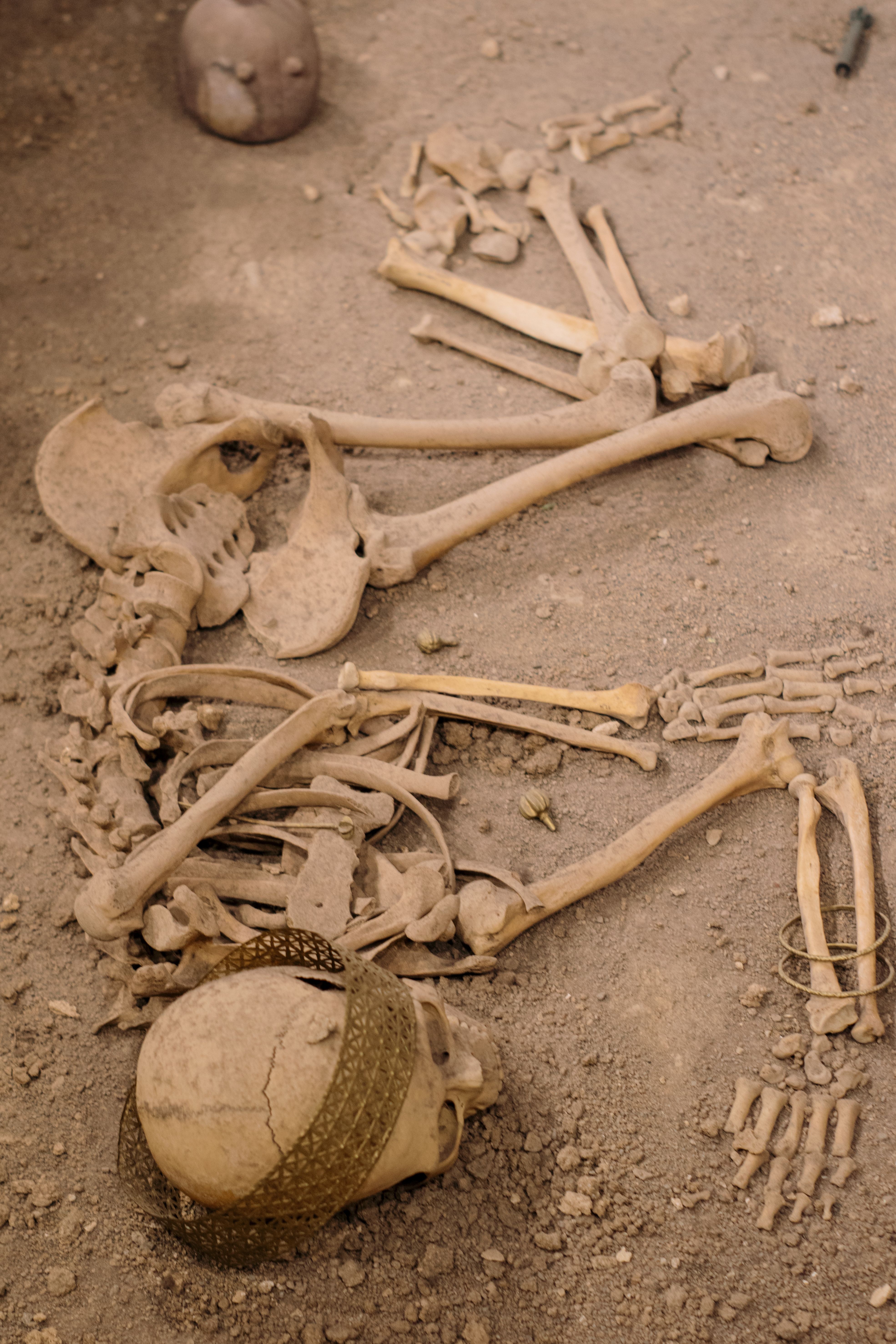
Archaeologists in Egypt have successfully uncovered a well-preserved Byzantine-era city, dating back to the 4th century, within the Dakhla Oasis in the country's vast Western Desert. The excavation has revealed extensive quarters featuring both residential and religious structures, notably including a basilica-style church, which signifies a significant Christian presence. Alongside these architectural marvels, researchers have also recovered a trove of artifacts, including ancient coins, pottery fragments, and various tools, all providing tangible evidence of the city's vibrant past and the daily lives of its inhabitants.
WHO ARE THE KEY PLAYERS
The primary actors in this significant discovery are the **archaeologists** themselves, whose meticulous work has brought this ancient city to light. While specific individuals may lead the digs, these professionals are typically affiliated with national or international research institutions and are often supported by the **Egyptian Ministry of Tourism and Antiquities**, which oversees all archaeological expeditions and cultural heritage preservation within Egypt. The historical context is provided by the **Byzantine Empire**, the eastern continuation of the Roman Empire, which ruled over Egypt during the period this city thrived.
UNDERSTANDING THE LOCATION
The discovery was made in **Egypt's Western Desert**, a vast, arid region west of the Nile River, known for its significant archaeological sites and several fertile oases. Specifically, the site is located in the **Dakhla Oasis**, one of the seven major oases of the Libyan Desert (part of the Western Desert). Dakhla has historically been a crucial area for settlement, agriculture, and trade routes, serving as a lifeline in the desert due to its underground water sources. Its remote location has ironically contributed to the preservation of many ancient structures, shielding them from modern development and environmental degradation.
BACKGROUND AND CONTEXT
The **Byzantine Era** refers to the period of the Eastern Roman Empire, which began after the fall of the Western Roman Empire in 476 CE (though its roots are often traced to the founding of Constantinople in 330 CE) and lasted until the Ottoman conquest of Constantinople in 1453 CE. During this extensive period, the empire encompassed much of the eastern Mediterranean, including Egypt, which was a vital province, known as the 'breadbasket' due to its agricultural output, particularly grain. The 4th century, when this newly discovered city flourished, was a transformative time, witnessing the rise of Christianity as the dominant religion within the Roman Empire and subsequently the Byzantine Empire, following Emperor Constantine's conversion and the Edict of Milan.
EXPLAINING IMPORTANT REFERENCES
When we speak of the **Byzantine-era**, we are referring to a historical period marked by the cultural, political, and religious influence of the Eastern Roman Empire. This empire, with its capital at Constantinople (modern-day Istanbul), preserved Roman laws and Greek culture while deeply integrating Christianity. A **basilica-style church** refers to an architectural form common in early Christian architecture. Characterised by a rectangular plan with a central nave, side aisles, and an apse at one end, basilicas were adapted from Roman public buildings to serve as places of worship, symbolising the growing prominence of Christianity. The **4th century** is the period from 301 AD to 400 AD, a crucial time for the development of early Christianity and the consolidation of the Roman Empire's eastern half, before its formal split.
IMPACT ANALYSIS
This discovery holds immense significance for understanding the Byzantine period in Egypt. It offers a rare, well-preserved snapshot of urban life, providing concrete evidence of the layout of residential areas, the organisation of religious spaces, and the economic activities that sustained desert communities. The artifacts like coins, pottery, and tools will allow historians and archaeologists to reconstruct daily routines, trade networks, and social hierarchies with greater accuracy. This find could also significantly boost Egypt's cultural tourism, drawing more international attention to its rich, multi-layered history beyond the pharaonic era. Furthermore, it reinforces the importance of the Dakhla Oasis as a historical crossroads and a treasure trove of ancient civilisations.
WHAT HAPPENS NEXT
Following the initial discovery and preliminary assessment, the archaeological team will embark on more detailed and extensive excavations. This will involve careful mapping of the entire city, systematic documentation of all structures and artifacts, and thorough scientific analysis of the recovered materials. Conservation efforts will be paramount to protect the newly exposed ruins from environmental factors. The findings will be published in academic journals, contributing to global historical knowledge. There is also a strong possibility that some of the most significant artifacts will eventually be displayed in Egyptian museums, making this ancient heritage accessible to the public.
HERO PERSPECTIVE
At Leverage On Heroes Media, we believe that understanding our past is fundamental to shaping our future. The uncovering of this ancient Byzantine city in Egypt is more than just an archaeological triumph; it is a profound testament to human resilience, ingenuity, and the enduring power of civilisation, even in challenging environments like the desert. This discovery allows us to connect with the daily lives, beliefs, and struggles of people who lived over sixteen centuries ago, enriching our collective human story and reminding us that every buried city holds lessons for the present generation. It underscores the heroic effort of those who meticulously piece together history, ensuring that the voices of the past are never truly silenced.
CLOSING
This extraordinary find in Egypt's Western Desert represents a pivotal moment in understanding the Byzantine presence in North Africa. As archaeologists continue their work, the world awaits further revelations that promise to deepen our appreciation for ancient cultures and the intricate tapestry of human history.