
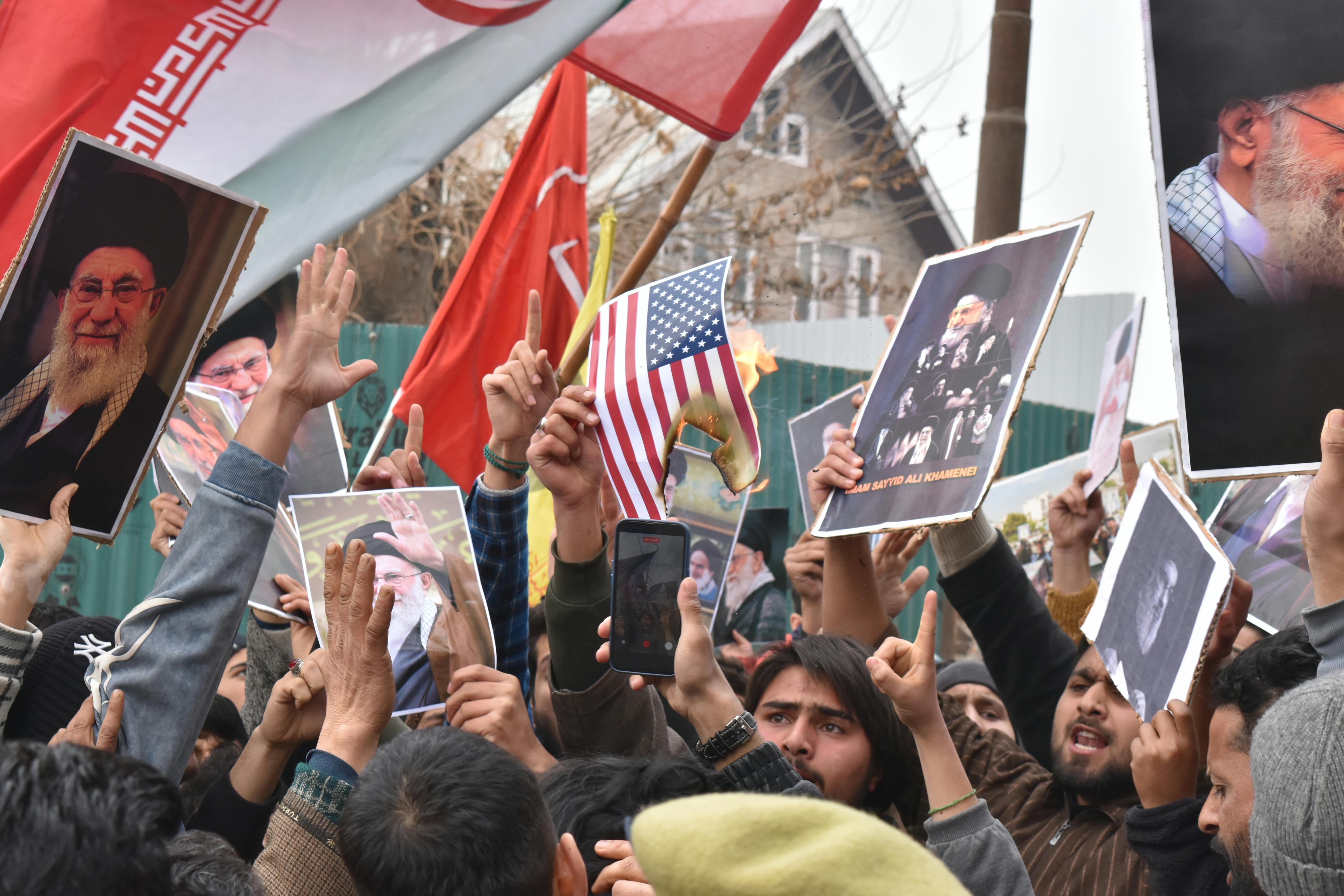
HEADLINE
Fragile Peace: Recent Hostilities Threaten US-Iran De-escalation Efforts
OPENING HOOK
The delicate balance of power and the pursuit of peace in the Middle East hang precariously as recent escalations between the United States and Iran threaten to unravel a hard-won, albeit fragile, ceasefire and a memorandum of understanding. This development signals a concerning regression in efforts to de-escalate tensions in a region vital to global stability and energy security.
WHAT HAPPENED
Recent reports indicate a worrying resurgence of hostilities and reported incidents attributed to both sides, which have directly undermined the terms of a standing ceasefire and a memorandum of understanding previously aimed at reducing friction between the United States and Iran. While specific details of these latest attacks remain contested or under investigation, their cumulative effect has been to erode trust and increase the risk of broader conflict, pushing the already strained relationship to a critical juncture. The nature of these incidents ranges from maritime security concerns to alleged proxy actions in the wider region.
WHO ARE THE KEY PLAYERS
At the heart of this geopolitical standoff are two major international actors: **Iran** and the **United States**. Iran, officially the Islamic Republic of Iran, is a significant Middle Eastern power known for its theocratic government, vast oil and gas reserves, and influential regional foreign policy. Its leadership, including Supreme Leader Ali Khamenei and President Ebrahim Raisi, guides its national and international agenda. The **United States**, led by President Donald J. Trump, is a global superpower with extensive strategic interests in the Middle East, particularly concerning oil flows, counter-terrorism, and the security of its allies. The US maintains a significant military presence in the region. Other regional players, including various non-state actors and allied nations, also play indirect roles, often acting as proxies or being directly impacted by the primary tensions.
UNDERSTANDING THE LOCATION
The core of this geopolitical drama unfolds in the **Persian Gulf** region, a critical waterway bordered by Iran, Iraq, Kuwait, Saudi Arabia, Bahrain, Qatar, the United Arab Emirates, and Oman. This area is globally significant due to its immense oil and natural gas reserves and the strategic **Strait of Hormuz**, a narrow maritime choke point through which a substantial portion of the world's oil supply passes. Any disruption here has immediate and profound global economic repercussions. Iran itself is a large country with a diverse landscape, strategically positioned at the crossroads of Central Asia, South Asia, and the Middle East.
BACKGROUND AND CONTEXT
The relationship between Iran and the United States has been fraught with tension for decades, particularly since the 1979 Iranian Revolution. Periods of diplomatic engagement, like the 2015 nuclear deal (Joint Comprehensive Plan of Action), have often been followed by renewed sanctions and heightened confrontation. The current ceasefire and memorandum of understanding represent more recent attempts, likely informal or tacit, to de-escalate specific flashpoints or to establish channels for communication to prevent miscalculation. Such agreements are often the result of painstaking diplomatic efforts, sometimes facilitated by third-party nations, aiming to create a temporary cessation of hostilities and a framework for dialogue in the absence of a comprehensive peace treaty.
EXPLAINING IMPORTANT REFERENCES
In diplomatic terms, a **ceasefire** refers to a temporary agreement to stop fighting in a war or conflict, often a precursor to more sustained peace negotiations. It's a pause, not an end, to hostilities. A **Memorandum of Understanding (MoU)** is a formal agreement between two or more parties. While not as legally binding as a treaty, it signifies a serious commitment and outlines shared goals, intentions, and areas of cooperation or de-escalation. In this context, it likely details specific actions or restraints expected from both the US and Iran to reduce military activity or avoid provocative acts. **Escalation** refers to an increase in the intensity or scope of a conflict, moving from minor incidents to more significant confrontations, often with unpredictable outcomes.
IMPACT ANALYSIS
The collapse or severe jeopardization of the US-Iran ceasefire and MoU carries significant implications. Regionally, it risks reigniting proxy conflicts, destabilizing neighboring countries, and potentially leading to direct military confrontations. For the global economy, especially Nigeria as an oil-producing nation, renewed tensions in the Persian Gulf could trigger sharp increases in international crude oil prices, impacting government revenue projections and the cost of imported goods. Domestically, higher global oil prices can translate to increased fuel costs (like for PMS, or petrol) for ordinary Nigerians and businesses, affecting transport fares and market prices. Furthermore, it undermines international efforts to promote diplomacy over conflict, sending a discouraging signal about the efficacy of de-escalation initiatives in complex geopolitical landscapes.
WHAT HAPPENS NEXT
The immediate future will likely see a flurry of diplomatic activity, possibly involving international mediators from organizations like the United Nations or influential countries seeking to prevent further escalation. Both Washington and Tehran will face immense pressure to clarify their positions and demonstrate a commitment to stability, or risk being seen as solely responsible for renewed conflict. The challenge lies in rebuilding the trust that these recent incidents have eroded. The path forward could involve renewed, albeit difficult, negotiations to salvage parts of the understanding, or conversely, a further hardening of positions and increased military posturing, with unpredictable consequences for global security and the economic well-being of nations like Nigeria.
HERO PERSPECTIVE
Leverage On Heroes Media views the jeopardization of the US-Iran agreement with profound concern. In a world yearning for stability, especially one where the economic ripple effects of distant conflicts directly impact the pockets of Nigerians, the pursuit of peace must remain paramount. We believe that true heroism in international relations lies not in the flexing of military might, but in the unwavering commitment to dialogue, de-escalation, and the protection of innocent lives. The international community, and particularly the key players, must rise above immediate provocations and find the courage to rebuild trust, for the sake of regional stability and global prosperity.
CLOSING
The unraveling of the fragile understanding between the United States and Iran serves as a stark reminder of the volatile nature of international relations. As the world watches, the actions taken in the coming days and weeks will determine whether diplomacy can still prevail, or if the region is destined for another cycle of instability and confrontation.