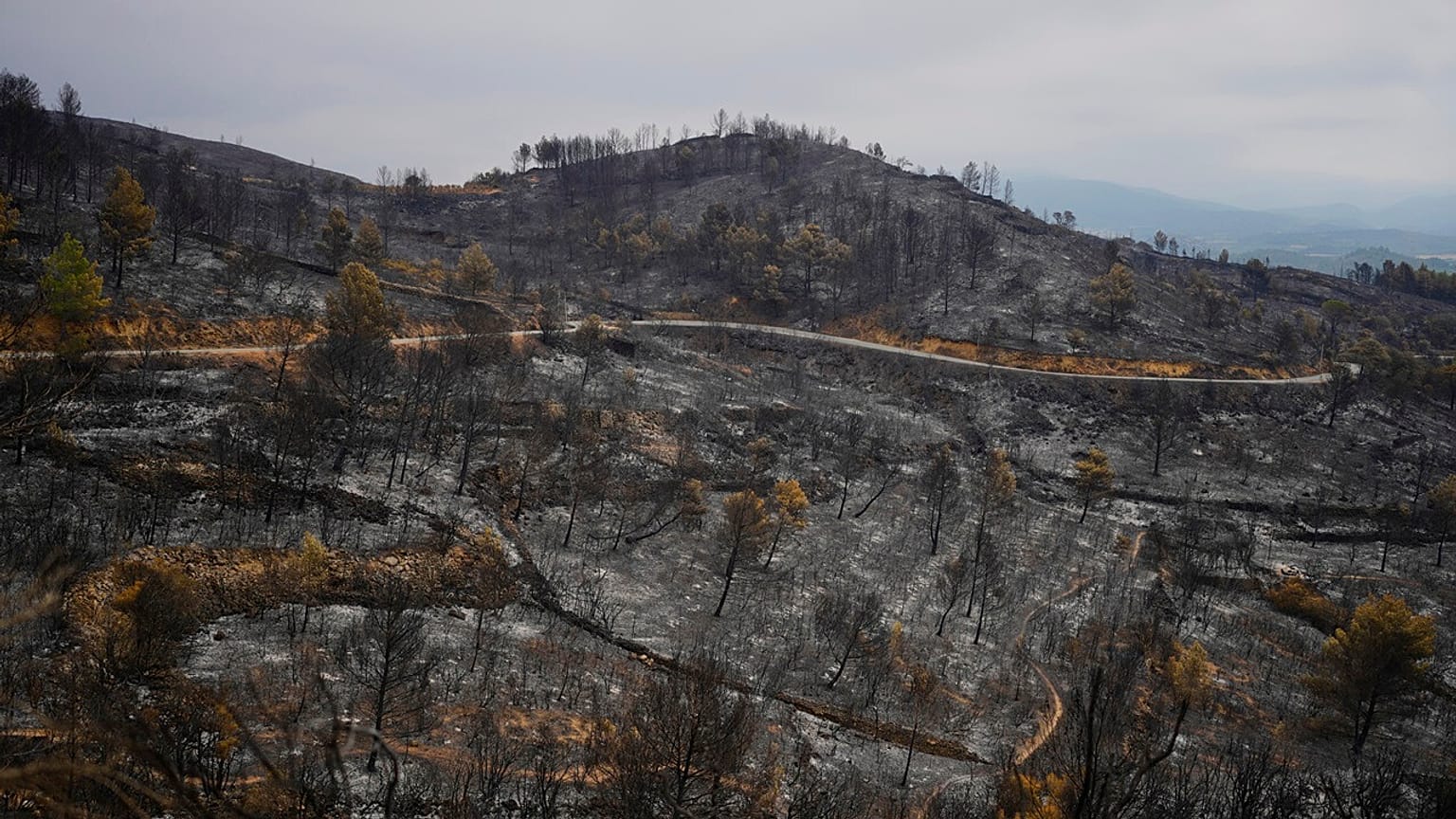
France Battles Raging Wildfires Amidst Record Heatwave, Thousands Evacuated
Southern France is currently grappling with widespread wildfires, intensified by a record-breaking heatwave, forcing the urgent evacuation of nearly 3,000 residents from their homes.
Leverage On Heroes Media
Image via guardian.ng (editorial use, news commentary)
HEADLINE
France Battles Raging Wildfires Amidst Record Heatwave, Thousands Evacuated
OPENING HOOK
Across the globe, environmental crises continue to underscore the fragile balance between human activity and nature's fury. Today, our focus turns to Southern France, where an escalating natural disaster is testing the resilience of communities and emergency services alike.
WHAT HAPPENED
Southern France is currently grappling with widespread wildfires, colloquially known in Nigeria as "bushfires," which have forced the urgent evacuation of nearly 3,000 residents from their homes. These destructive blazes have been significantly intensified by a record-breaking heatwave gripping the region, creating tinderbox conditions that accelerate their spread and make containment exceedingly difficult.
WHO ARE THE KEY PLAYERS
* **The French Government:** This is the executive authority of France, responsible for coordinating national disaster response, deploying resources, and ensuring public safety during emergencies like wildfires. Their role involves strategic planning and resource allocation.
* **French Emergency Services:** Comprising firefighters (known as *Sapeurs-Pompiers*), police, and civil security units, these professionals are at the forefront of combating the fires, rescuing citizens, and managing evacuations. They are the operational arm of the disaster response.
* **Local Communities and Residents:** These are the people living in the affected areas of Southern France, who are the primary victims of the fires. They face displacement, potential loss of property, and significant disruption to their daily lives.
* **Environmental Agencies:** Organizations dedicated to monitoring climate patterns and providing data crucial for understanding and predicting such extreme weather events, which help inform government responses and long-term strategies.
UNDERSTANDING THE LOCATION
The wildfires are primarily affecting **Southern France**, a region renowned for its Mediterranean climate, picturesque landscapes, and significant tourism industry. Areas like the **Côte d'Azur** (a famous stretch of coastline) and **Provence** (a historical province known for its diverse landscapes) are particularly vulnerable due to their naturally dry summers, dense forests, and often strong, dry winds. This geographical makeup, combined with periods of intense heat, creates an ideal environment for wildfires to ignite and spread rapidly.
BACKGROUND AND CONTEXT
France, like many other European nations, has experienced a noticeable increase in the frequency and intensity of heatwaves over recent decades. This phenomenon is widely linked to global climate change, which leads to higher average temperatures and more extreme weather events. Historically, wildfires have been a recurring challenge in Southern France during summer months, but the current record heatwave has pushed the risk to unprecedented levels, overwhelming traditional mitigation strategies. This situation mirrors similar challenges faced in regions across the world, including parts of Nigeria's arid zones during the harmattan season when uncontrolled bush burning can escalate into dangerous bushfires.
EXPLAINING IMPORTANT REFERENCES
* **Wildfires:** These are unplanned, uncontrolled fires that burn in natural areas such as forests, grasslands, or bushland. In Nigeria, they are commonly referred to as "bushfires." They can spread rapidly, consuming vegetation, structures, and posing severe threats to human life and wildlife.
* **Evacuation:** This is the organized process of moving people away from a dangerous area to a safer location. In the context of wildfires, it's a critical safety measure implemented by authorities to protect residents from direct harm and allow emergency services to operate effectively without endangering civilians.
* **Record Heatwave:** This refers to a prolonged period of unusually hot weather where temperatures reach or exceed previously recorded highs for a specific region. Such heatwaves significantly dry out vegetation, making it highly flammable, and contribute significantly to the ignition and rapid spread of wildfires.
IMPACT ANALYSIS
The immediate impact of these wildfires is devastating: the destruction of natural habitats, loss of homes, and the forced displacement of thousands of people. Economically, the fires threaten France's vital tourism sector, particularly in the affected southern regions, and can destroy agricultural lands, impacting local livelihoods and the broader economy. Environmentally, the release of vast amounts of carbon dioxide and other pollutants into the atmosphere exacerbates air quality issues and contributes to the greenhouse effect. Socially, affected communities face trauma, significant disruption, and the immense challenge of rebuilding their lives and properties. For Nigeria, while the geographical context differs, the lessons around climate change's impact on vulnerable populations and economies are starkly relevant, especially concerning desertification in the north and devastating floods in the south.
WHAT HAPPENS NEXT
The immediate priority for French authorities and emergency services is to contain the raging fires and ensure the safety of all residents. This involves continuous aerial and ground firefighting operations, often working around the clock. Once the fires are brought under control, the focus will shift to assessing the damage, providing humanitarian aid and support to displaced communities, and initiating long-term recovery efforts, including reforestation where possible. Looking ahead, France and other vulnerable nations will likely intensify discussions and actions on climate change adaptation, improved forest management practices, and enhanced early warning systems to mitigate the impact of future extreme weather events. There will also be a critical review of current emergency response protocols.
HERO PERSPECTIVE
At Leverage On Heroes Media, we see this unfolding crisis in France as a stark reminder of the interconnectedness of our global environment and the urgent need for collective action on climate change. While geographically distant, the underlying causes and impacts of these wildfires resonate deeply, highlighting how extreme weather events, whether heatwaves in Europe or devastating floods and droughts in Nigeria, disproportionately affect vulnerable populations. Our editorial angle emphasizes the heroism of emergency responders, the resilience of affected communities, and the critical role of informed global citizenship in advocating for sustainable practices and robust disaster preparedness worldwide. It’s a call to understand that climate action is not just an international policy debate, but a local imperative for every community.
CLOSING
As the smoke clears over Southern France, the resolve of its people and the dedication of its emergency services will undoubtedly shine through. Yet, the broader message remains: the fight against climate change and its devastating consequences is a global one, demanding our collective attention, innovation, and unwavering commitment to a more sustainable future for all.