
HEADLINE
Germans hogging the sunloungers? Poll finds Italians and French are worse
OPENING HOOK
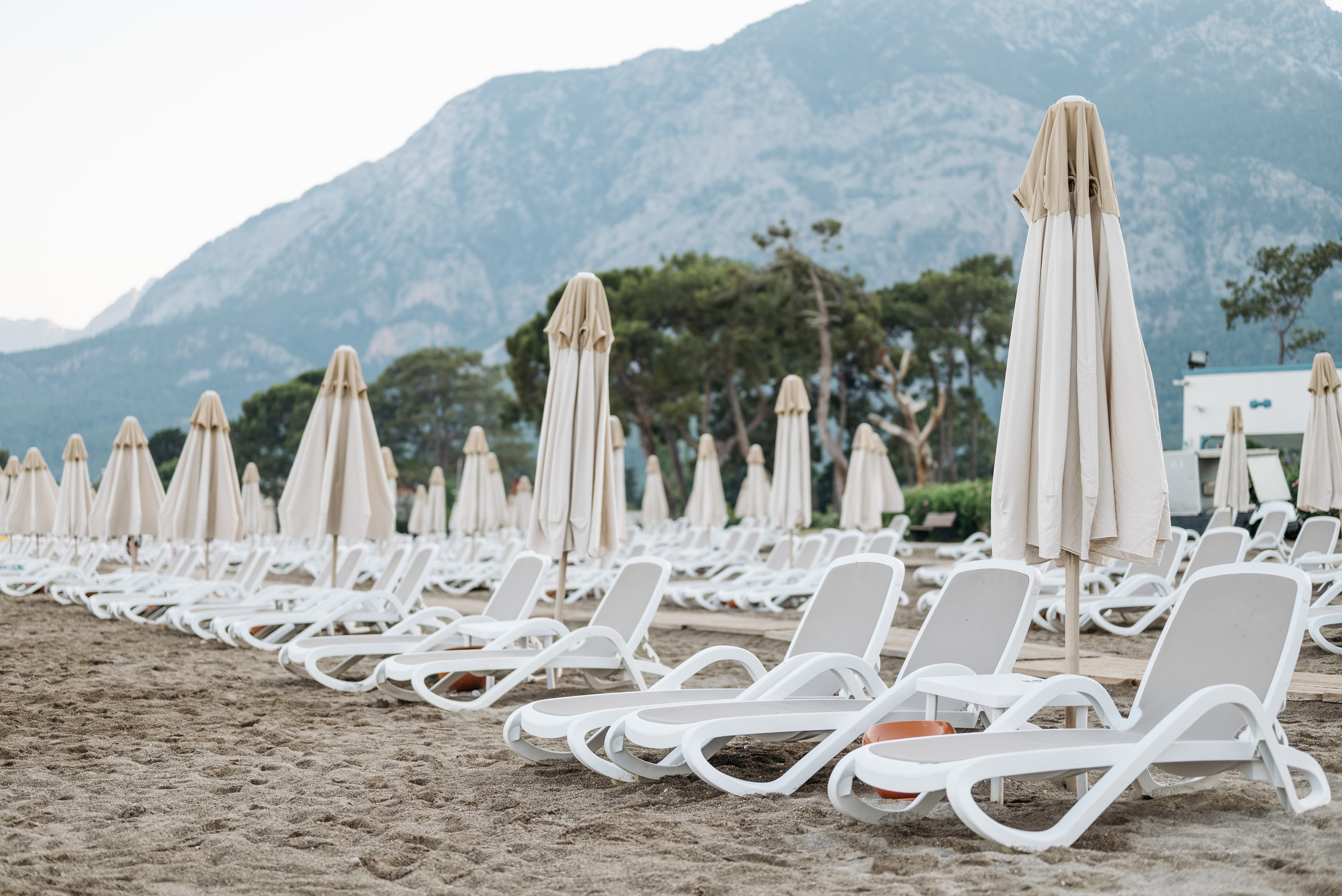
For decades, holiday resort culture has whispered about the early morning dash to secure poolside furniture, with British and German tourists pinned as the primary culprits. However, fresh polling data completely flips this narrative, showing that Mediterranean holidaymakers outpace Northern Europeans in the art of reserving resort loungers.
WHAT HAPPENED
A recent survey conducted by YouGov, a major international data and analytics firm, gathered insights from holidaymakers across several European countries regarding poolside etiquette. The findings show that while 51 percent of Germans and 46 percent of Britons readily point the finger at German tourists as the main towel-hoggers, actual self-reporting paints a very different picture. Italian and French holidaymakers emerged as the most frequent practitioners of placing towels, hats, or umbrellas on sunloungers to stake a claim before actually heading down to use them.
WHO ARE THE KEY PLAYERS
YouGov, a London-headquartered global public opinion and data analytics data company, conducted the survey on European holiday habits. European holidaymakers, specifically tourists from nations including the United Kingdom, Germany, France, and Italy, form the primary demographic pool analysed in the poll.
UNDERSTANDING THE LOCATION
European holiday resorts, spanning popular Mediterranean destinations in Spain, Italy, Greece, and the south of France, serve as the backdrop for this perennial cultural clash. These hubs attract millions of international visitors every summer, turning limited poolside real estate into a high-stakes zone for vacationers seeking optimal relaxation spots under the sun.
BACKGROUND AND CONTEXT
The stereotype linking German tourists to aggressive sunlounger reservation has been a staple of European travel culture and media jokes for generations, often tied to tropes of extreme organisation and early rising. British tabloid media and comedy sketches have long reinforced the idea of waking up at dawn to drop a towel over the best lounger by the hotel pool. YouGov's latest research, however, demonstrates how cultural perceptions can vastly differ from actual holiday behaviours across nationalities.
EXPLAINING IMPORTANT REFERENCES
YouGov is a public data and market research firm that uses internet-based polling to gauge public opinion on everything from political elections to lifestyle habits like holiday etiquette. A sunlounger is an adjustable outdoor chair, commonly found near hotel swimming pools and beaches, designed for reclining in the sun.
IMPACT ANALYSIS
This data provides amusement and relief for German tourists long burdened by the pool-hogging stereotype, shifting the spotlight onto French and Italian vacationers. For resort management across Europe, the findings highlight a universal human desire to secure premium spots, prompting some hotels to implement stricter anti-reservation rules—such as removing unattended towels after a set period—regardless of the guest's nationality.
WHAT HAPPENS NEXT
As European tourism peaks during the summer holiday seasons, hotels and resorts are expected to continue experimenting with formal policies to manage pool crowding. Future surveys may track whether awareness of these polling results changes towel-placement habits among French and Italian travellers.
HERO PERSPECTIVE
The YouGov survey data regarding European holiday habits establishes that 51 percent of Germans and 46 percent of Britons associate German tourists with the ritual of reserving sunloungers. This specific metric quantifies how deeply entrenched the cultural stereotype remains, even as the broader poll data redirects the actual practice toward Italian and French holidaymakers.
CLOSING
Cultural tropes in tourism often outlive the empirical reality, as demonstrated by this comprehensive look at European poolside habits. While the morning rush for the best view will likely remain a staple of resort life, the blame can now be shared more equitably across borders.