
HEADLINE
Thune, Trump, Senate conservatives reach deal to set aside budget, SAVE America Act impasse
OPENING HOOK
A weeks-long legislative standoff within the United States Senate has concluded with a compromise that defers contentious funding and voting security votes until late summer.
WHAT HAPPENED
On Friday night, US Senate Majority Leader John Thune, President Donald J. Trump, and a bloc of conservative US senators reached an agreement to set aside an immediate vote on a budget resolution and defer action on the SAVE America Act until after the congressional August recess. The compromise resolves an internal Republican dispute that had paralyzed chamber proceedings and threatened party unity over fiscal planning and election integrity measures.
WHO ARE THE KEY PLAYERS
John Thune, US Senator representing South Dakota and the Senate Majority Leader responsible for scheduling chamber votes. Donald J. Trump, President of the United States, who engaged directly with congressional leadership to shape the legislative timeline. Ron Johnson, US Senator representing Wisconsin and a leading voice among Senate conservatives who advocated for the deferred measures.
UNDERSTANDING THE LOCATION
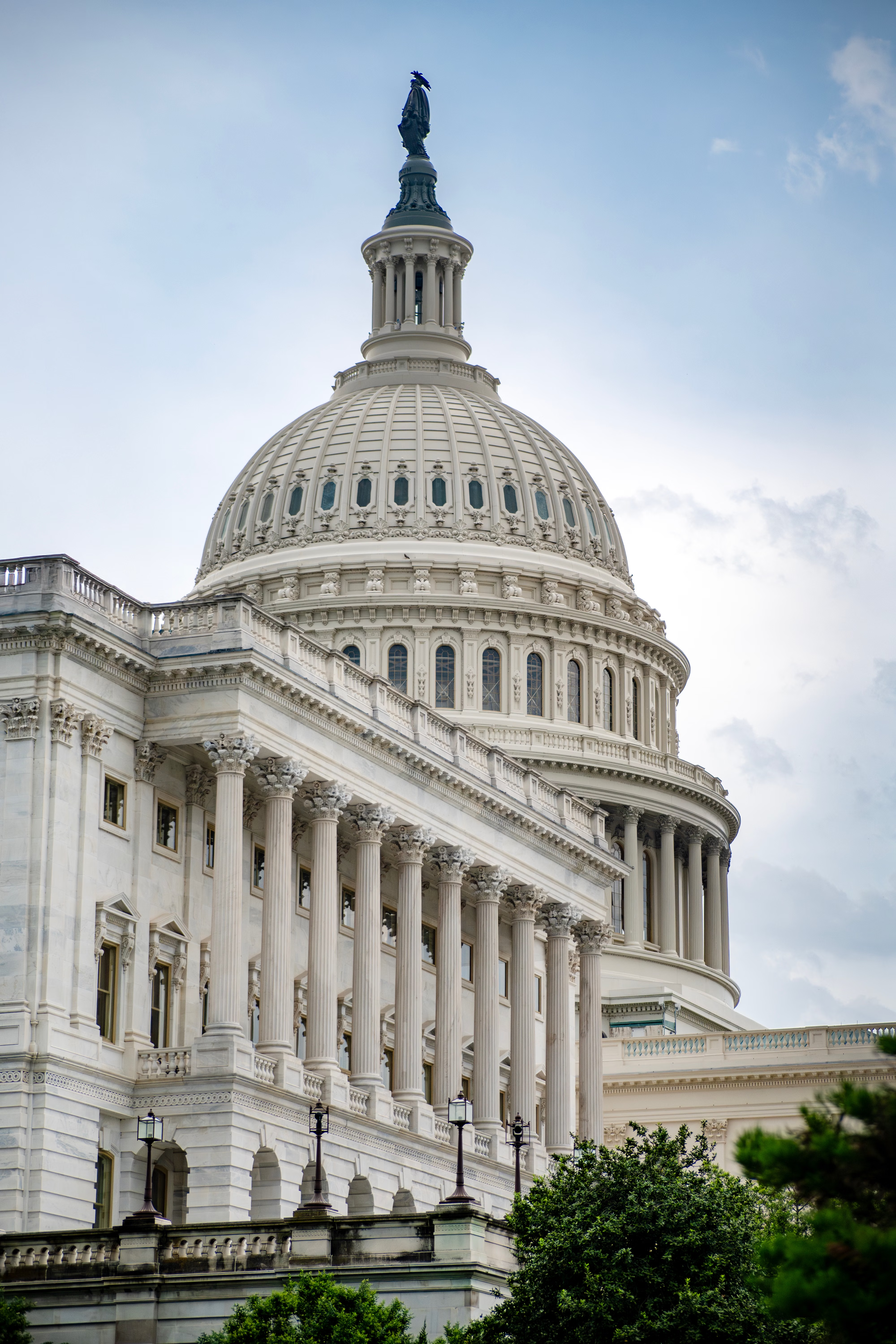
Washington, D.C., is the capital city of the United States and the permanent seat of the federal government. Within the United States Capitol building, the United States Senate functions as the upper chamber of the bicameral legislature, where major fiscal legislation, executive appointments, and federal statutes are debated and enacted.
BACKGROUND AND CONTEXT
The dispute centered on conflicting priorities within the Republican legislative agenda, specifically balancing a comprehensive federal budget resolution against standalone conservative policy proposals. The Safeguard American Voter Eligibility (SAVE) Act has been a focal point for lawmakers seeking stricter documentation requirements for federal elections, creating friction over timing and legislative vehicles.
EXPLAINING IMPORTANT REFERENCES
The congressional August recess is a standard period in the United States legislative calendar when members leave Washington to return to their home states and districts to meet with constituents. A budget resolution is a non-binding congressional blueprint that sets overall spending limits and revenue targets but does not require presidential signature.
IMPACT ANALYSIS
Deferring the measures avoids an immediate legislative collision that could have risked a government funding disruption or fractured the Republican caucus ahead of upcoming policy debates. By pushing the showdown past the August recess, lawmakers gain additional time to negotiate compromises, though it defers decisions on core conservative priorities.
WHAT HAPPENS NEXT
Normal Senate operations will resume without an immediate showdown on the budget and voting legislation, allowing the chamber to address routine nominations and other pending bills. The debate over the budget resolution and the SAVE America Act is scheduled to return to the Senate floor following the conclusion of the August recess.
HERO PERSPECTIVE
The agreement brokered by Senate Majority Leader John Thune, President Donald J. Trump, and Senator Ron Johnson specifically defers votes on the federal budget resolution and the SAVE America Act until after the August recess, resolving a multi-week caucus impasse.
CLOSING
The temporary truce averts a fractious intraparty vote in Washington, setting the stage for renewed legislative battles over fiscal policy and election administration when Congress reconvenes in September.