
HEADLINE
Tinubu, Sanwo-Olu Champion Patriotism and Partnership for National Development at CSOs Summit
OPENING HOOK
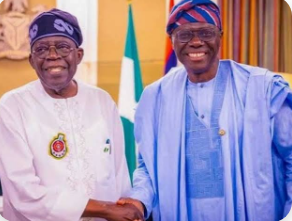
In a significant call for collective action, Nigeria's President, Bola Ahmed Tinubu, and the Governor of Lagos State, Mr. Babajide Sanwo-Olu, have jointly appealed to Civil Society Organisations (CSOs) and Community-Based Organisations (CBOs) to deepen their commitment to patriotism and foster robust partnerships with the government. Their message underscores a critical need for unified efforts, transparency, and shared responsibility to drive sustainable progress across the nation.
WHAT HAPPENED
President Bola Ahmed Tinubu and Governor Babajide Sanwo-Olu recently charged Civil Society Organisations (CSOs) and Community-Based Organisations (CBOs) to embrace patriotism, accountability, and inclusive partnerships as essential ingredients for accelerating Nigeria's sustainable development. This appeal was made during the National Summit of Civil Society Organisations (CSOs), where both leaders stressed the imperative for stronger collaboration between governmental bodies and these grassroots and advocacy groups to achieve national goals.
WHO ARE THE KEY PLAYERS
**President Bola Ahmed Tinubu:** As the current President of Nigeria, a position he assumed on May 29, 2023, he is the chief executive of the Federal Republic of Nigeria and Commander-in-Chief of the Armed Forces. His call reflects the federal government's stance on citizen engagement and development.
**Governor Babajide Sanwo-Olu:** The incumbent Governor of Lagos State, Nigeria's economic nerve centre, Mr. Sanwo-Olu plays a crucial role in implementing policies at the state level. His participation alongside the President highlights the importance of sub-national government engagement with civil society.
**Civil Society Organisations (CSOs):** These are non-governmental, non-profit groups that operate independently of the state and market. They include advocacy groups, professional associations, charitable organisations, and foundations. In Nigeria, CSOs often play roles in human rights, environmental protection, good governance, and community development.
**Community-Based Organisations (CBOs):** These are smaller, localised, and often informal groups that work directly within specific communities to address local issues such as health, education, sanitation, and economic empowerment. They are crucial for grassroots development and ensuring that development initiatives reach the most vulnerable.
UNDERSTANDING THE LOCATION
While the specific location of the National Summit was not detailed in the brief, the involvement of Governor Sanwo-Olu strongly suggests the event took place in Lagos State. Lagos is Nigeria's most populous state and its primary economic hub, often serving as a significant venue for national conferences and summits due to its infrastructure and accessibility. Its diverse population and robust civil society presence make it an ideal setting for discussions on national development and collaboration.
BACKGROUND AND CONTEXT
The relationship between government and civil society in Nigeria has evolved significantly since the return to democratic rule in 1999. CSOs played a pivotal role in the struggle for democracy and continue to be vital in holding government accountable, advocating for citizens' rights, and complementing government efforts in service delivery, especially in areas where state presence is weak. However, instances of mistrust and divergent priorities have sometimes hindered effective collaboration. The current administration's call for renewed partnership comes at a time when Nigeria faces complex challenges, including economic instability, insecurity, and the need for diversified growth. Fostering a united front with CSOs and CBOs is seen as crucial for leveraging diverse expertise and resources to tackle these pressing issues.
EXPLAINING IMPORTANT REFERENCES
**Patriotism:** In simple Nigerian English, this means a deep love for one's country and a willingness to put the nation's interests first. It's about working together, regardless of tribe or religion, to build a better Nigeria for everyone. For CSOs and CBOs, it implies aligning their work with national development goals rather than solely focusing on narrow interests.
**Accountability:** This refers to the obligation of individuals or organisations to account for their activities, accept responsibility for them, and disclose the results in a transparent manner. For CSOs, it means being transparent with their funding, operations, and impact, just as they often demand accountability from the government. It's about ensuring that resources, whether public or private, are used wisely and for the intended purpose, like making sure a project meant to provide clean water actually does so without funds disappearing.
**Sustainable Development:** This concept refers to development that meets the needs of the present without compromising the ability of future generations to meet their own needs. In Nigeria, it translates to ensuring that our economy grows, our environment is protected, and our people have access to basic necessities like good roads, steady power supply, quality education, healthcare, and job opportunities, all in a way that can last for a long time, not just a quick fix.
IMPACT ANALYSIS
This renewed call for collaboration from the highest levels of government could significantly impact the operational landscape for CSOs and CBOs. If genuine partnerships are forged, it could lead to increased access to government data, resources, and policy-making tables, potentially enhancing the effectiveness and reach of development initiatives. For example, CBOs working on health in rural areas could receive better support from state health ministries. Conversely, a lack of clear implementation strategies or persistent trust deficits could render the appeal merely symbolic. The success hinges on both government and civil society demonstrating a willingness to move beyond rhetoric towards concrete actions, such as joint task forces, shared funding mechanisms, and regular consultative forums. This could translate to more impactful projects on the ground, better service delivery, and stronger democratic institutions if accountability is genuinely embraced by all parties.
WHAT HAPPENS NEXT
The immediate next steps will involve CSOs and CBOs responding to this call by articulating their frameworks for partnership and demonstrating their commitment to national development. The government, on its part, will need to show tangible steps towards fostering an enabling environment for collaboration, perhaps through policy reforms that simplify engagement, provide access to data, or offer support for grassroots initiatives. We might see the establishment of formal liaison committees or joint working groups to bridge the gap between government agencies and civil society. The effectiveness of this charge will ultimately be measured by the visible improvements in key development indicators across various sectors and geopolitical zones, and the sustained engagement between these critical stakeholders.
HERO PERSPECTIVE
Leverage On Heroes Media believes that genuine national progress is impossible without the active and patriotic participation of all segments of society. The call by President Tinubu and Governor Sanwo-Olu for CSOs and CBOs to embrace partnership and accountability is not just a plea; it is a recognition of the indispensable role these organisations play in bridging the gap between governance and the governed. We contend that when government and civil society genuinely collaborate, driven by a shared vision of patriotism and transparency, the dividends of development—from improved education to better healthcare and economic opportunities—will truly reach every Nigerian. This is the path to building a resilient and prosperous nation.
CLOSING
The imperative for collaboration between government and civil society is clearer than ever. As Nigeria navigates its developmental challenges, the synergy between policy-makers and grassroots organisations, underpinned by patriotism and accountability, presents a powerful formula for achieving the sustainable progress that all Nigerians desire.