
HEADLINE
Federal Government to Begin Rollout of 3,700 Telecom Towers in Rural Communities by October 2026
OPENING HOOK
millions of Nigerians living in remote settlements currently struggle with basic phone calls and slow internet, a massive infrastructure push is underway to bridge the digital divide.
WHAT HAPPENED
The Federal Government of Nigeria has unveiled plans to deploy 3,700 telecommunications towers nationwide, focusing heavily on rural and underserved communities that suffer from poor voice and internet connectivity. Dr Bosun Tijani, the Minister of Communications, Innovation and Digital Economy, made this known on Tuesday after briefing President Bola Tinubu at the State House in Abuja. The physical rollout of these critical network masts is officially scheduled to commence in October 2026, aiming to bring more than 20 million previously unconnected citizens into the digital mainstream.
WHO ARE THE KEY PLAYERS
Dr Bosun Tijani leads the Ministry of Communications, Innovation and Digital Economy, serving as the chief driver of federal technology policies and infrastructure expansion. President Bola Tinubu, the President of Nigeria, provides overarching executive backing and receives direct briefings on major public infrastructure initiatives. The millions of residents living in remote villages across the country form the primary beneficiary group, whose everyday communication and digital business prospects stand to change significantly once the towers become operational.
UNDERSTANDING THE LOCATION
The State House in Abuja serves as the official seat of government and the residence of the President of Nigeria, located within the Federal Capital Territory. Abuja acts as the political and administrative hub where federal executive decisions, policy rollouts, and ministerial briefings take place before being implemented across the six geopolitical zones of the country.
BACKGROUND AND CONTEXT
Telecommunications access in Nigeria has grown exponentially over the past two decades, largely driven by private mobile network operators. However, commercial telecommunications companies often bypass remote rural settlements because the cost of building and powering base stations outweighs the expected financial return from sparsely populated areas. To counter this commercial neglect, governments frequently rely on specialized public sector interventions and universal service funds to subsidize infrastructure deployment in areas where the free market fails to reach.
EXPLAINING IMPORTANT REFERENCES
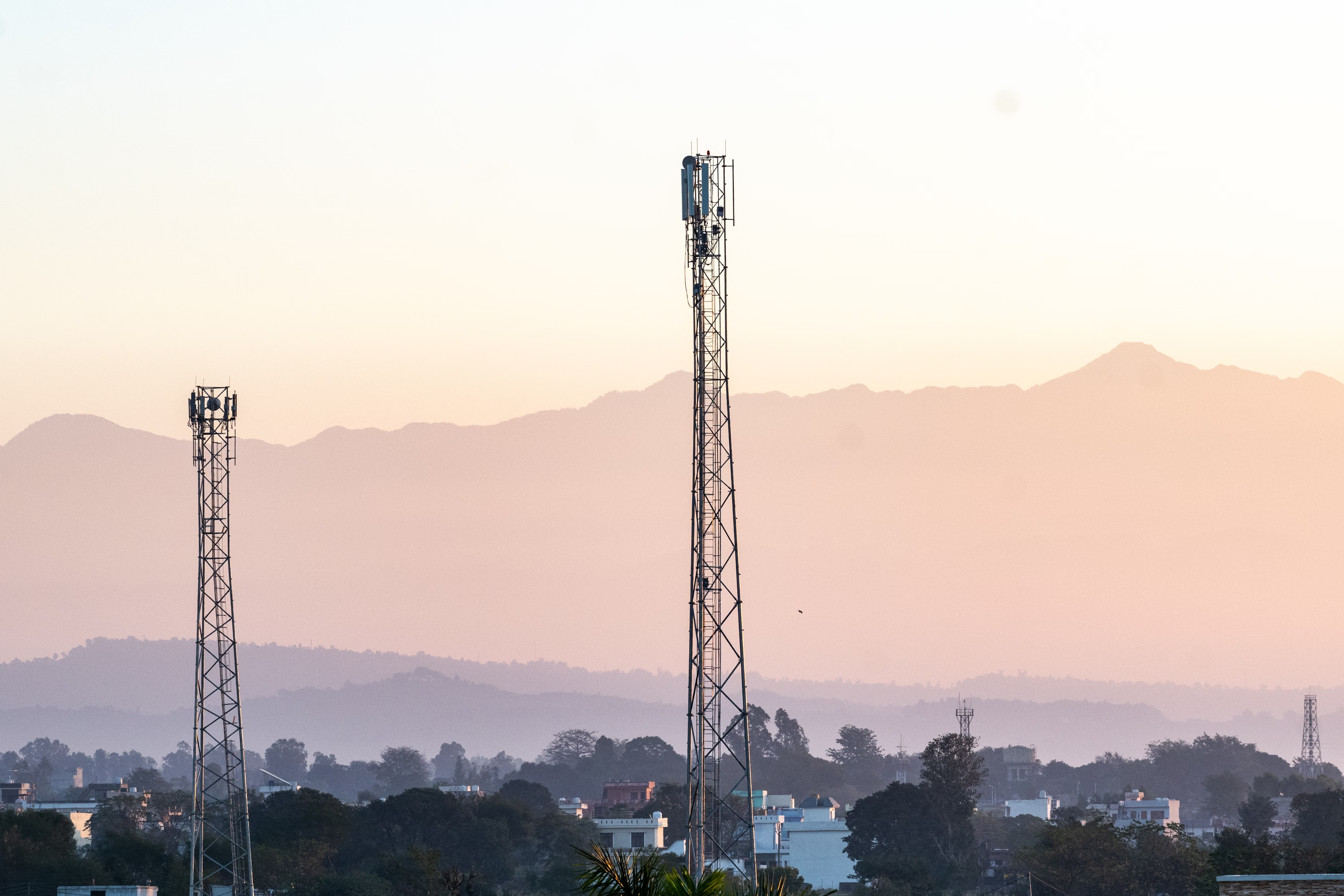
A telecom tower, often called a base station or mast, is a tall structure that holds antennas and electronic communications equipment to transmit mobile phone signals and internet data. Underserved communities refer to geographic locations where network coverage is either completely absent or too weak to support reliable voice calls and standard internet browsing. The Federal Government refers to the central administration operating out of Abuja, which sets national policies that apply across all states.
IMPACT ANALYSIS
Bringing network coverage to over 20 million unconnected Nigerians has far-reaching implications for rural commerce, education, and security. Smallholder farmers, local traders, and rural entrepreneurs will gain access to mobile banking and digital marketplaces, making it easier to receive payments and buy goods without traveling long distances. Furthermore, improved connectivity allows rural security agencies and community leaders to communicate faster during emergencies, helping to address rising security concerns in remote parts of the country.
WHAT HAPPENS NEXT
Following the recent briefing at the State House, the Ministry of Communications, Innovation and Digital Economy will work on finalizing site surveys, procurement logistics, and technical partnerships leading up to the October 2026 deployment date. Stakeholders will monitor how the government coordinates with private infrastructure providers and local authorities to ensure the physical towers are successfully installed and powered in the targeted communities.
HERO PERSPECTIVE
The October 2026 target announced by Minister Bosun Tijani follows his briefing to President Bola Tinubu at the State House in Abuja regarding the deployment of 3,700 telecom towers. This ambitious nationwide infrastructure project specifically targets over 20 million underserved Nigerians who currently lack reliable voice and internet connectivity. Meeting this timeline will require strict coordination between federal agencies and infrastructure partners to ensure these remote base stations are successfully delivered.
CLOSING
The planned rollout of 3,700 telecom towers marks a crucial step toward digital inclusion for millions of underserved citizens. As preparations continue toward the October 2026 launch, the success of this initiative will depend on consistent execution, adequate funding, and effective collaboration between the public and private sectors.