
HEADLINE
Sheep-herding robot dogs put to the test at Royal Queensland Show – video
OPENING HOOK
Agricultural innovation meets live livestock management as engineering researchers deploy four-legged robotic systems to control sheep movement in public demonstrations.
WHAT HAPPENED
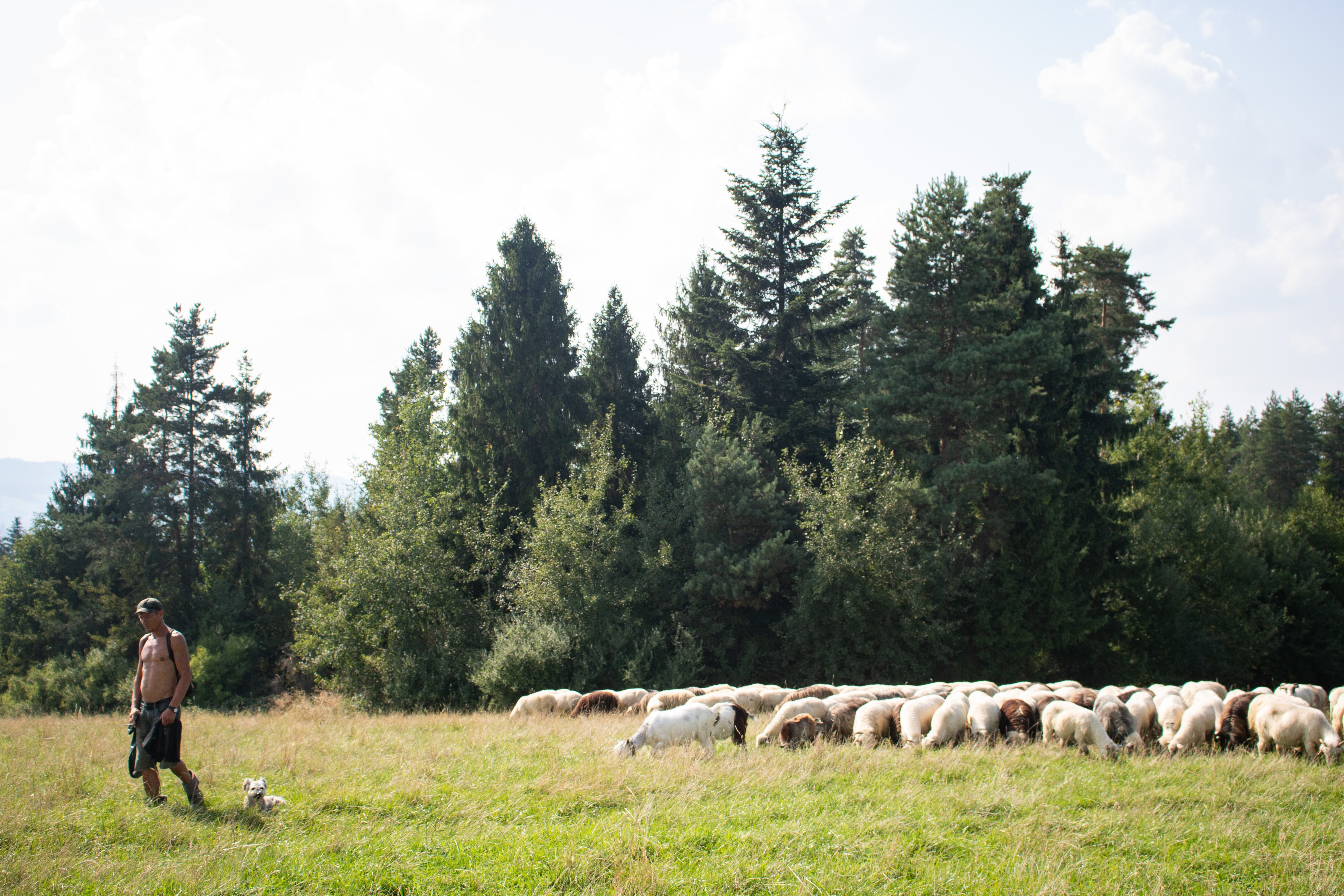
A project led by the University of the Sunshine Coast is currently trialling the use of robotic dogs to herd sheep, with public demonstrations taking place at the Ekka, officially known as the Royal Queensland Show, held at the Brisbane Showgrounds.
WHO ARE THE KEY PLAYERS
Dr David Alonso-Caneiro, Senior Lecturer in Mechatronics at the University of the Sunshine Coast, serves as the lead researcher overseeing the robotic trials. The University of the Sunshine Coast is the primary public research institution sponsoring the technology development.
UNDERSTANDING THE LOCATION
The trials take place at the Brisbane Showgrounds during the Royal Queensland Show, commonly called the Ekka. Brisbane is the capital and most populous city in the Australian state of Queensland, situated on the eastern coast of the country.
BACKGROUND AND CONTEXT
Agricultural robotics has expanded rapidly as farms face labor shortages and rising operational costs. Mechatronics, a multidisciplinary branch of engineering that combines mechanical, electrical, telecommunications, control, and computer engineering, forms the foundation of modern agricultural automation.
EXPLAINING IMPORTANT REFERENCES
The Royal Queensland Show is an annual agricultural agricultural exhibition run by the Royal National Agricultural and Industrial Association of Queensland. Autonomous tools refer to machinery programmed to operate independently of direct human intervention during specific operational tasks.
IMPACT ANALYSIS
Successful deployment of herding robots could reduce operational labor costs for livestock producers and minimize physical risks associated with traditional mustering methods. However, widespread adoption depends on battery life durability, mechanical reliability in rough terrain, and initial acquisition costs for farm owners.
WHAT HAPPENS NEXT
Researchers will analyze data gathered from the Brisbane Showgrounds demonstrations to refine the navigation algorithms of the robotic dogs. Further trials on working farms are expected to evaluate performance under extended field conditions.
HERO PERSPECTIVE
Dr David Alonso-Caneiro supervises the mechatronics trials at the Royal Queensland Show using four-legged robotic units inside the Brisbane Showgrounds arena. These public demonstrations evaluate whether mechatronic systems can reliably replicate the directional control traditionally performed by working kelpies and border collies. The long-term engineering goal focuses on transitioning these prototypes into autonomous agricultural assets for Australian livestock properties.
CLOSING
The integration of robotics into livestock management marks a significant shift in agricultural technology, bridging advanced mechatronics engineering with everyday farming practices.